by Neetu | May 28, 2020 | Fitness Activity
Movement skills/concepts
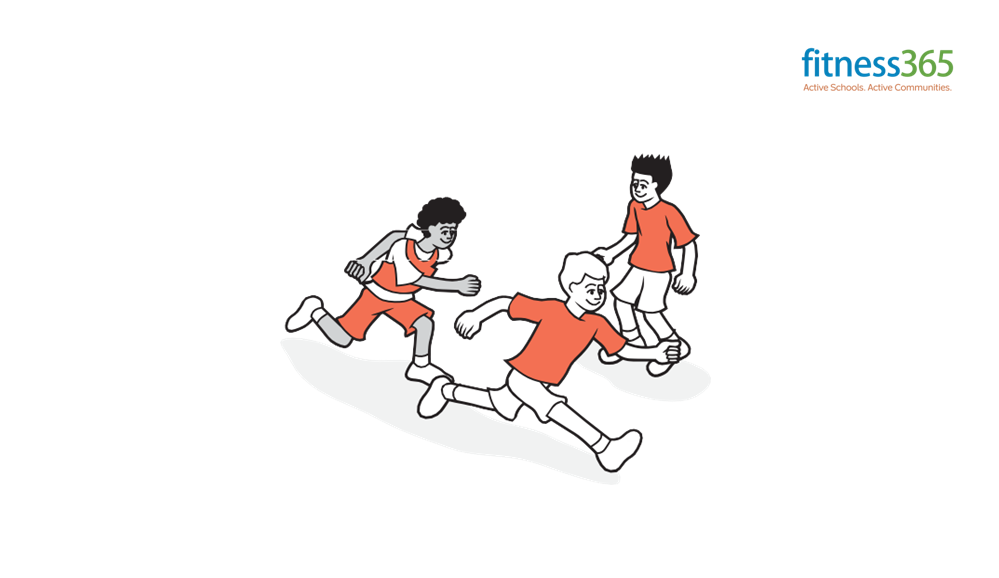
Dodging and faking to avoid a chaser, space awareness, changing direction, and speed.
Set-up
- Bands/bibs.
- Defined grass or hard area, approximately 10 meters square. Groups of six: two chasers with a band/bib each, and four runners.
Activity
Chasers have 1 minute to catch all the runners. If tagged, a runner has to freeze and count to 10 out loud before starting to run again. The object is for the chasers to have all the runners frozen at the same time.
Can you see …?
- runners: plant and go
- chasers: watching hips
Variations
Vary locomotor skill: For example, play by walking, leaping, or crawling.
Fitness tag: When tagged, instead of freezing, runners do a chosen exercise, (e.g. five push-ups or sit-ups).
by Neetu | May 28, 2020 | Fitness Activity
Movement skills/concepts
Dodging to avoid stationary taggers, changing direction, and speed.
Set-up
- Bases (e.g. softball bases or circular discs).
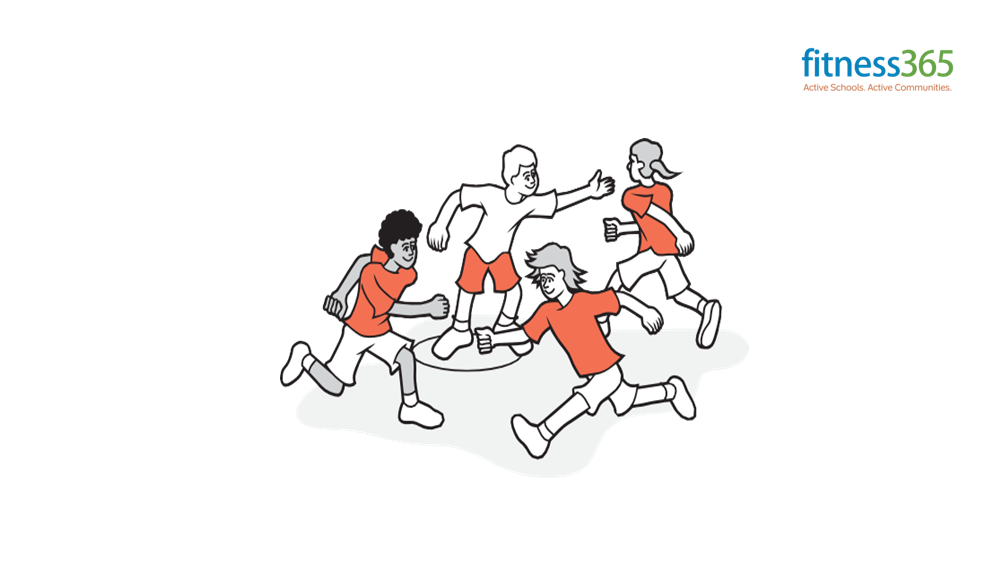
- Defined grass or hard area with a starting line and bases/discs scattered an arm’s length apart on the ground.
- Two teams of approximately five–ten each: the taggers must keep both feet on the base.
Activity
The objective is for the dodgers to cross the area without being touched by any of the taggers. The taggers must keep both feet on the base. Reverse roles.
Can you see …?
- knees bent, staying low
- plant and go
- looking ahead
- faking
- quick moves
Variations
Vary locomotor skill: Walk, skip, gallop, or leap.
Hospital tag: When a dodger is touched, they pretend they are stung and lose the ability to use that body part. For example, if touched on the leg, the dodger tries to cross the area by hopping.
Tagger challenge: Instead of tagging anywhere on the body, the taggers have to tag the left knee of the dodgers with their right hand.
by Neetu | May 28, 2020 | Fitness Activity
Movement skills/concepts
Chasing, dodging, change of direction and speed, moving in general space, and relationships (with others).
Set-up
- Bases e.g. softball bases or color discs.
- Large, defined grass or hard area with a number of bases/discs scattered on the ground.
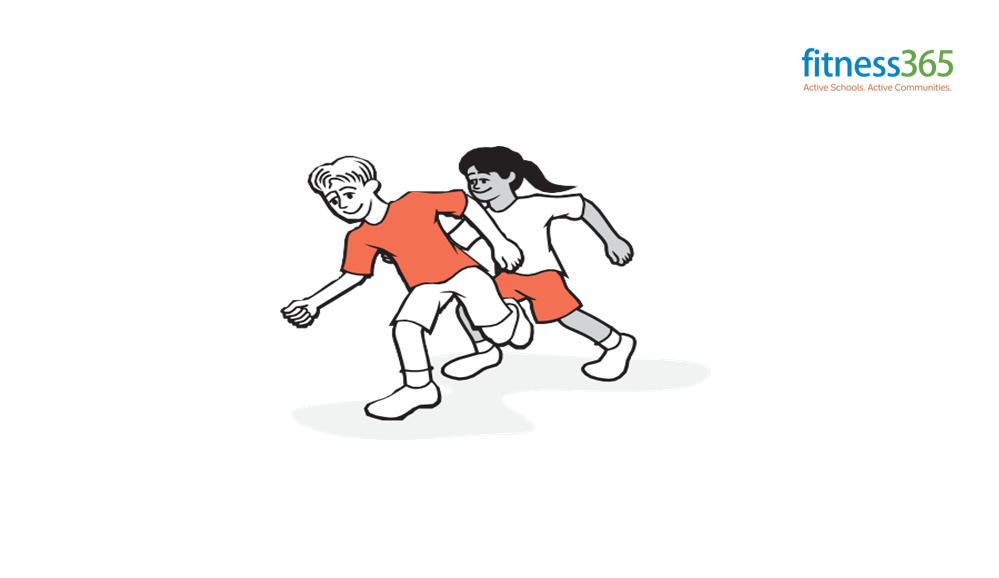
- Children in pairs, one the leader and the other the shadow, are spread out in the area.
Activity
The shadow follows the leader and imitates all their movements, keeping as close to the leader as possible. The leader challenges their shadow by trying to get away from them. Change roles and repeat.
Start off in the same way again but, on a given signal (e.g. whistle), the leader tries to get to one of the bases/discs before their shadow tags them. Change roles and repeat, but this time with fewer bases/discs spread out across the area.
Can you see …?
- quick moves
- plant and go
- faking
- shadow watching the leader’s hips
Variations
Vary locomotor skill: Start with walking, then move on to skipping, galloping, jogging, hopping, and running.
Vary set-up: Increase or decrease the area size or the number of bases.
Tandem tag: Partners link arms and play the game with another pair. One pair is the leader and the other pair is the shadow.
by Neetu | May 28, 2020 | Fitness Activity
Movement skills/concepts
Dodging, swerving, evading, changing direction, and moving in general space.
Set-up
Large balls, quoits, frisbees.
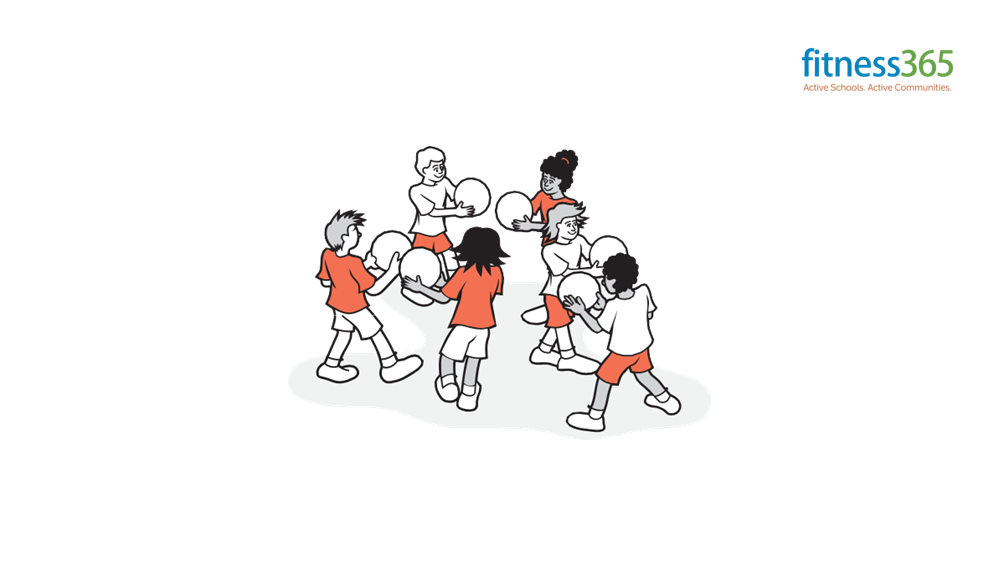
Each group of four–five is in a marked square (5 x 5 meters); each player has a ball/quoit/frisbee.
Activity
Each player holds their ball/quoit/frisbee in front like a steering wheel and walks around without touching the other players (dodgems) in the square. Keep moving for 1 minute.
Repeat activity increasing the speed – skipping, jogging, and running.
Can you see …?
- head up
- quick moves
- safe traffic
- plant and go
Variations
Add obstacles: Include other obstacles (e.g. cones) to evade.
Create pathways: Set-up a pathway of cones for the dodgems to move in and out of and around.
by Neetu | May 28, 2020 | Fitness Activity
Movement skills/ concepts
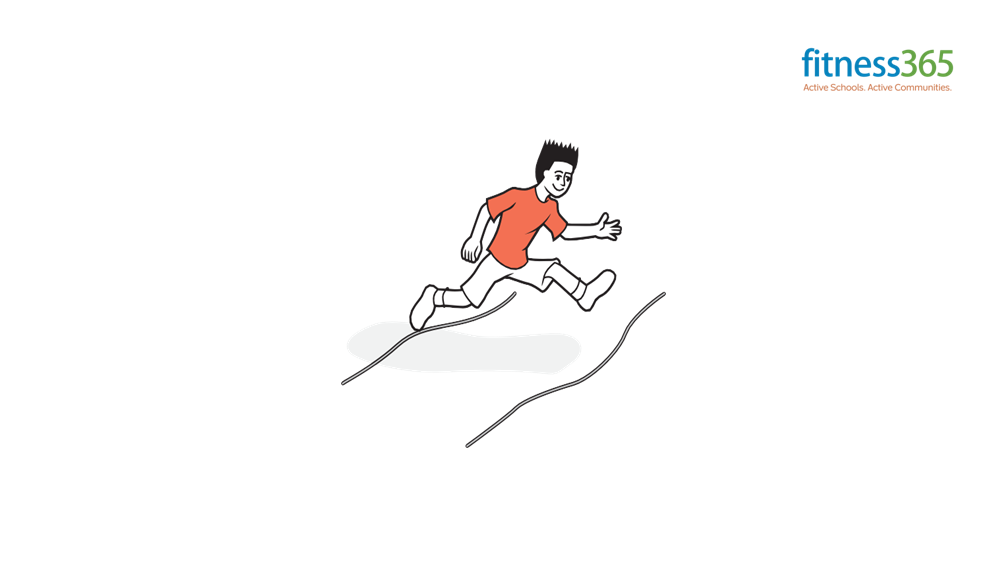
Running fast, changing direction, and changing speed.
Set-up
Children are scattered in the general space of a defined grass or hard area.
Activity
On a signal, children try to catch a ‘make-believe’ partner. Partners may be very quick so children will need to work hard to catch up with them.
This time, children make-believe they are walking a dog, and, suddenly, the dog gets off the leash. Children run as quickly as they can to try to catch the dog. Ready and action!
This time, children make-believe they are a famous pop star walking down the main street of town and the paparazzi have just spotted them. Children run to get away from them. Ready and action!
Can you see …?
- head up
- fast arms
- fast legs
- quick moves
- plant and go
Variations
Add other ‘make-believe’ scenarios: For example, a sports star ready to score the winning goal or try.
Slow it down: Perform the scenario in slow motion.