by Neetu | Jun 2, 2020 | Fitness Activity
Movement skills/concepts
Volleying a rebound ball, judging speed and direction of rebound, and using body parts.
Set-up
- Lightweight balls.
- Gymnasium or hall, or an outside area that has a wall.
- Children, each with a ball, spread out, facing the wall approximately 2 metres (two of a child’s giant steps) away from it.
Activity
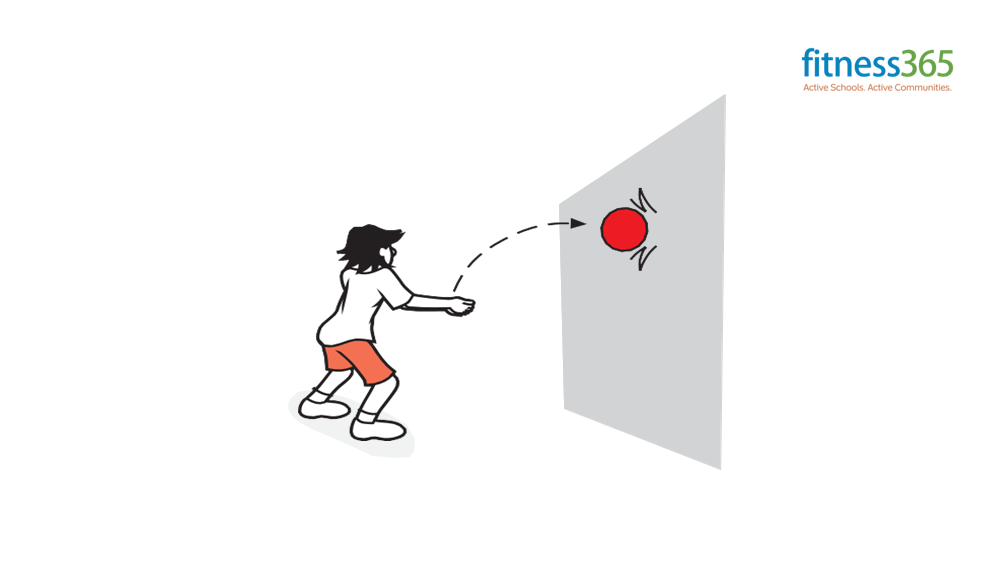
- bounce the ball and volley it against the wall, when the ball returns from the wall, let it bounce and then catch repeat this sequence five times – bounce, volley, bounce, catch
- practise the sequence without catching the ball (i.e. bounce, volley, bounce, volley) as many times as you can without making a mistake (i.e. without letting it bounce twice in a row or hit the wall)
- practise striking the ball with either hand – so, if the ball comes to your right side, strike it with your right hand; if the ball rebounds on your left side, use your left hand
- repeat all of the above activities, but this time with the bump (two forearms) pattern
Variations
Work with a partner: Practise underhand striking to the wall, alternating the volley and bounce (i.e. your partner will volley the ball to the wall and, once the ball has bounced, the next volley is yours).
by Neetu | Jun 1, 2020 | Fitness Activity
Movement skills/concepts
Volleying a rebound ball, judging speed and direction of rebound, and using body parts.
Set-up
- Lightweight balls.
- Gymnasium or hall, or an outside area that has a wall.
- Children, each with a ball, spread out, facing the wall approximately 2 metres (two of a child’s giant steps) away from it.
Activity
Using a one-handed underarm action, can you …?
bounce the ball and volley it against the wall, when the ball returns from the wall, let it bounce and then catch itrepeat this sequence five times – bounce, volley, bounce, catch
- practise the sequence without catching the ball (i.e. bounce, volley, bounce, volley) as many times as you can without making a mistake (i.e. without letting it bounce twice in a row or hit the wall)
- practise striking the ball with either hand – so, if the ball comes to your right side, strike it with your right hand; if the ball rebounds on your left side, use your left hand
- repeat all of the above activities, but this time with the bump (two forearms) pattern
Can you see …?
- staying behind the line of the ball
- using quick feet to get into position
- striking with the palm of the hand
- extending legs and arms, and following through to the target
Variations
Work with a partner: Practise underhand striking to the wall, alternating the volley and bounce (i.e. your partner will volley the ball to the wall and, once the ball has bounced, the next volley is yours).
by Neetu | Jun 1, 2020 | Fitness Activity
Movement skills/concepts
Striking upwards with the hands, space awareness (directions and levels), relationships (with objects), body awareness, and time and energy.
Set-up
- Soft, large balls, balloons, or lightweight objects; rope; net.
- Children, each with a ball, are spread out in a defined grass or hard surface area.
Activity
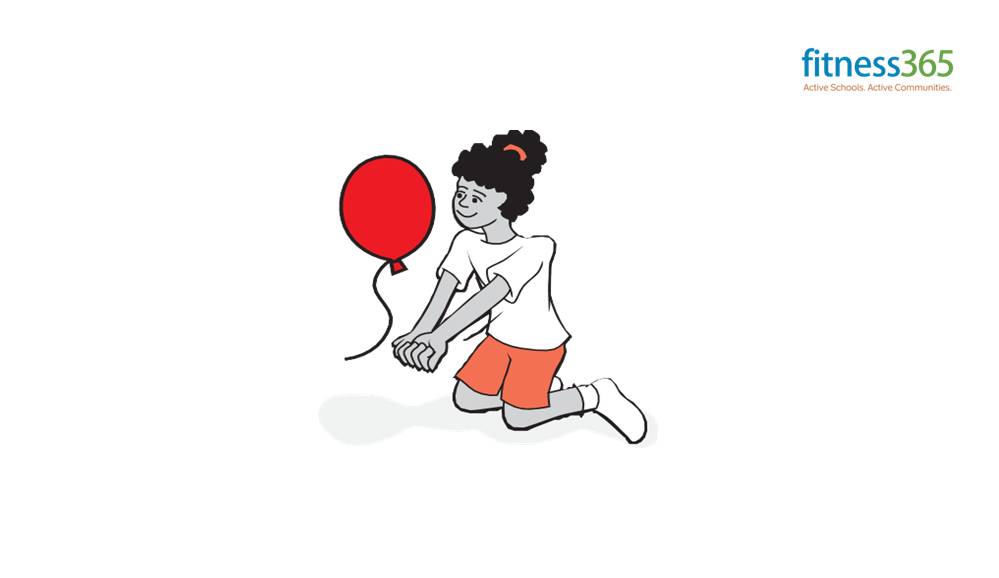
- very hard/softly, high/low
- from a seated/kneeling/lying position
- so that it goes above your head and as high as possible
- forward/backwards/to the side/in a circle
- alternating hard and soft
- with different body parts, e.g. head, knees, feet
- and relax/tense your fingers
- ‘giving’/without ‘giving’ with the ball
- so that it drops inside/outside your personal space
- from directly underneath it/off to one side
- over a line/rope/net
- as many times as you can in 30 seconds
- as few times as you can in 30 seconds

by Neetu | Jun 1, 2020 | Fitness Activity
Movement skills/concepts
Bouncing a ball in a stationary position, throwing a large ball in different directions.
Set-up
- One ball and one hoop per child. A hard or grass surface.
- Groups of approximately four-six: children stand outside a circle of hoops, one at each hoop.
Activity
Each child bounces the ball continuously in their hoop. On the call of a number and ‘left’ or ‘right’, (e.g. ‘Three right’) they pass the balls around the circle, person to person, for the number of places and in the direction called. Then they continue to bounce in their own hoop.
- fingers spread and relaxed
- balanced body position
Variations
Add music: Bounce the ball to a musical rhythm, then pass it when the music stops.
Vary rules: Bounce the number of times called, then pass in the identified direction, (e.g. for ‘Three left’, bounce the ball three times and then pass to the left).
by Neetu | Jun 1, 2020 | Fitness Activity
Movement skills/concepts
Bouncing, dribbling, space awareness, and moving at different speeds.
Set-up
- Large balls, markers, hoops, music.
- Children, each with a large ball, are spread out in a defined level, hard surface area.
Activity
- feel the ball, run your fingers over it,
- push the ball with your hands, try to squash it out of shape
- roll the ball with your hand, foot, knee, shoulder, elbow, head, nose
- roll the ball over your body, head to toe, make your body into the shape of a ball
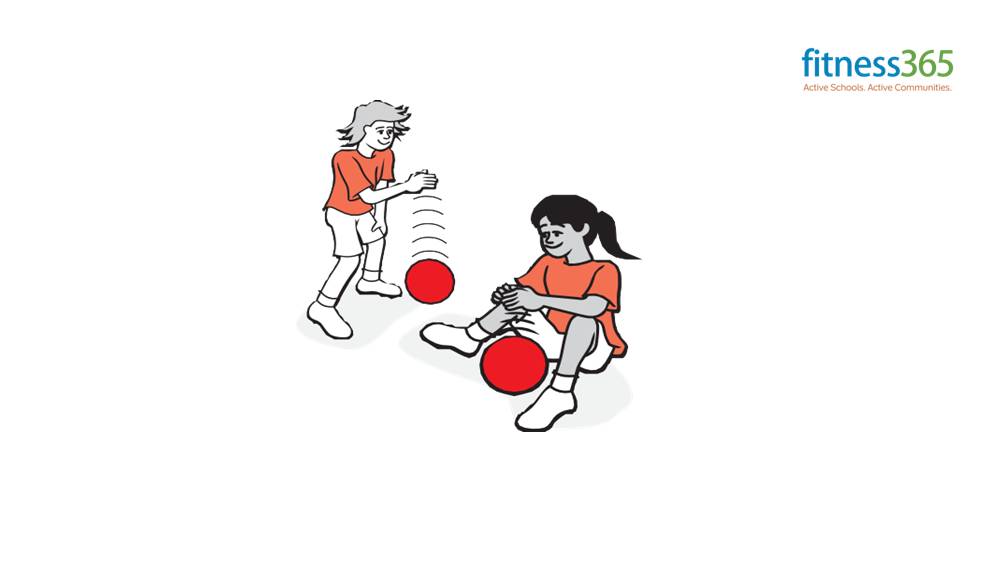
- bounce the ball while sitting – holding the ball in both hands, push it down using a pushing motion with relaxed fingers and catch return
- progress to bouncing the ball while kneeling then standing, maintaining eye contact with the ball
Holding the ball in both hands at waist height and placing your feet a shoulder-width apart, can you bounce the ball …?
- continuously from a stationary position
- while stepping side to side, then while turning
- with one hand only – change to the other hand
- with one hand, varying the height
- around your body
- through your legs front to back, then back to front
- while walking/jogging/running
- with alternate hands while traveling
- along a line, then inside hoops
- in a restricted space with others
- to music/rhyme/song
- and move with a fast dribble and slow feet
- and move with a slow dribble and fast feet
Variations
Create a sequence: Make up your own bouncing sequence individually or with a partner.