by Neetu | Jun 2, 2020 | Fitness Activity
Movement skills/concepts
Volleying ball to a stationary target, moving into space, changing direction and speed.
Set-up
- Lightweight balls.
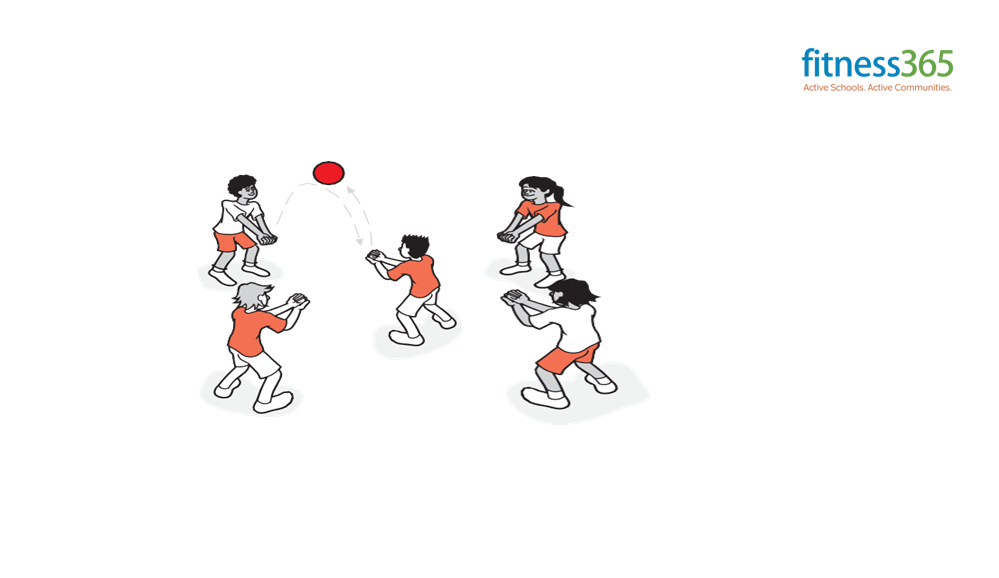
- Groups of four–five, with one ball per group, are spread out in a circle in a grass or hard surface area, with about 2 meters between each child. One child stands in the center of the circle and has the ball.
Activity
The child in the middle throws a high lob to one child in the circle, who volleys it back to the first child. This is repeated until each child has had a turn. The child in the middle is replaced by another child.
- moving the body under the ball
- fingers spread – contact with pads of fingers
- bending and extending – bending knees to receive, and extending legs and arms upward on contact
- following through
Variations
Pass around the circle: The first child in the circle throws the ball to the child on their left, who then volleys it in the air and catches it before throwing it to the next child on their left.
Increase challenge: Players try to volley around the circle without catching the ball.
by Neetu | Jun 2, 2020 | Fitness Activity
Movement skills/concepts
Dribbling a ball with the hands, throwing or passing, space, and body awareness.
Set-up
- Large balls.
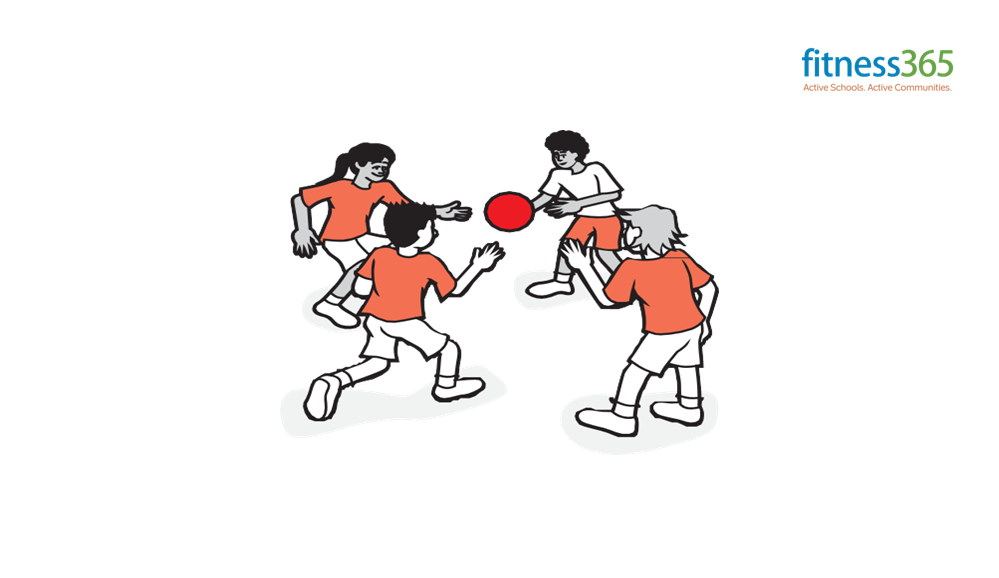
- Groups of four (three dribblers and a burglar), with one ball per group, in a defined grass or hard surface area.
Activity
The three dribblers dribble and pass the ball to see how long they can keep it away from the burglar, who tries to steal it. If the ball is stolen, the person who lost the ball becomes the new burglar. Nobody contact is allowed.
- head up looking around
- low dribbling – ball no higher than waist height
- relaxed fingertips control the dribble
Variations
- Modify rules: Play two on two, or three on three.
- Vary the size of the area: Decrease or enlarge the area.
Add goals: Place several markers about 1 meter apart as gates. See how many gates the dribblers can get through in a set time.
Vary skill and equipment: Use soccer or hockey dribbling skills.
by Neetu | Jun 2, 2020 | Fitness Activity
Movement skills/concepts
Dribbling a ball with hands stationary or moving, space awareness, and evading a tagger.
Set-up
- Large round bouncy balls.
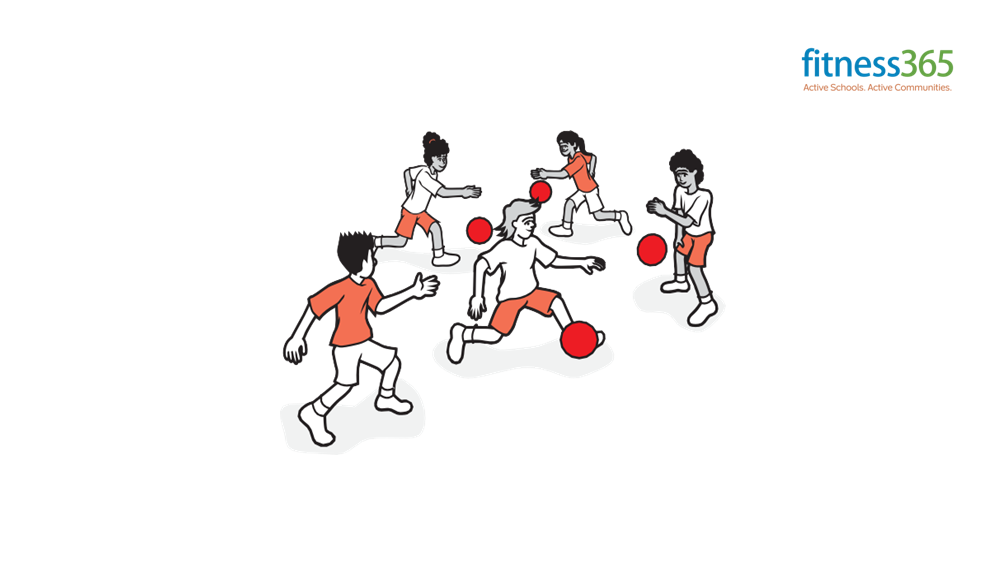
- Children are spread out in a defined grass or hard surface area with a safe line. All children have a ball except one child, who is the tyrannosaurus.
Activity
Children, move around the area, dribbling the ball for as long as possible. If a child loses control of the ball, they call, ‘Tyrannosaurus’. All then run holding their ball and trying to cross the safety line before being tagged by the tyrannosaurus. Choose a new tyrannosaurus and the game continues.
- relaxed dribbling
- head up looking around
- not touching others
Variations
Vary action of tyrannosaurus: The tyrannosaurus tries to steal the ball from dribblers while they are dribbling.
Vary action of dribblers: On the call of ‘Tyrannosaurus’, dribblers continue to dribble the ball while evading the tyrannosaurus.
by Neetu | Jun 2, 2020 | Fitness Activity
Movement skills/concepts
Overhead volleying, space, and body awareness.
Set-up
- Lightweight balls (balloons/foam balls/volleyballs).
- Children, each with a lightweight ball, are spread out in a defined grass or hard area.
Activity
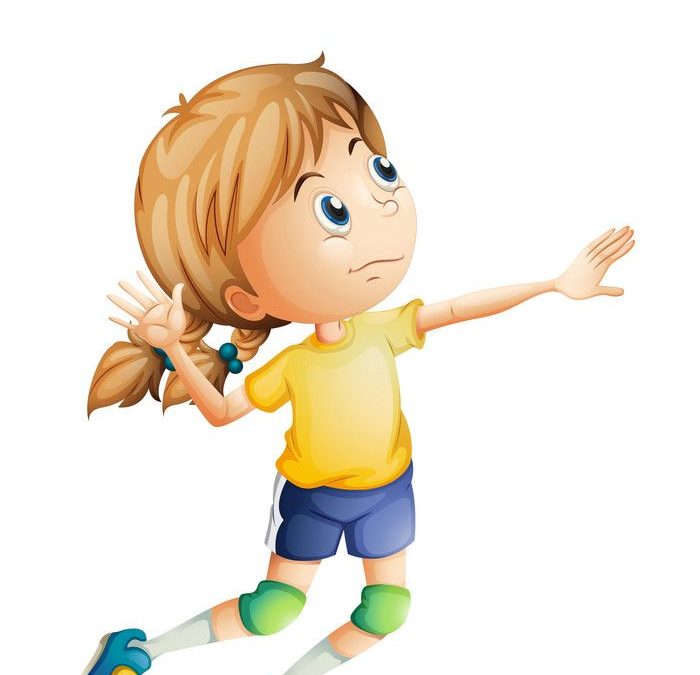
- toss the ball up in the air and, using the pads of your fingers, volley the ball upward above your head so that the ball returns directly to you, then catch the ball after each volley
- repeat and see if you can volley the ball upward twice in the air and then catch the ball; try volleying three times and catch, then gradually increase the number of times you volley the ball in the air and catch it – how many times can you volley the ball before it touches the ground?
- stand facing a wall, toss the ball above your head and volley it upward to the wall using both hands, then catch it after it rebounds from the wall; repeat, this time with two volleys in a row and catch, then gradually increase the number of times you volley in a row before you catch it
- with a partner standing one meter away, pass the ball back and forth with the overhead volley pattern – each person gets two strikes on each side
- still with your partner, see if you can keep the ball going with only one strike on each side
Variations
Introduce a net: Children toss a ball up and volley over a net to a partner on the other side, who catches it. The partner repeats the sequence. Children gradually build up to volleying the ball back and forth over the net as many times as possible without making a mistake.
by Neetu | Jun 2, 2020 | Fitness Activity
Movement skills/concepts
Underhand striking over a line/net, space awareness, and judging flight path, speed, and direction.
Set-up
- Ropes, elastic, chairs, cones, lightweight balls, tape. Lines are taped on the floor or indicated with ropes.
- Children in pairs, with one line per pair. Partners begin by standing on either side of their line, approximately two of a child’s giant steps away from it and facing each other across the line.
Activity
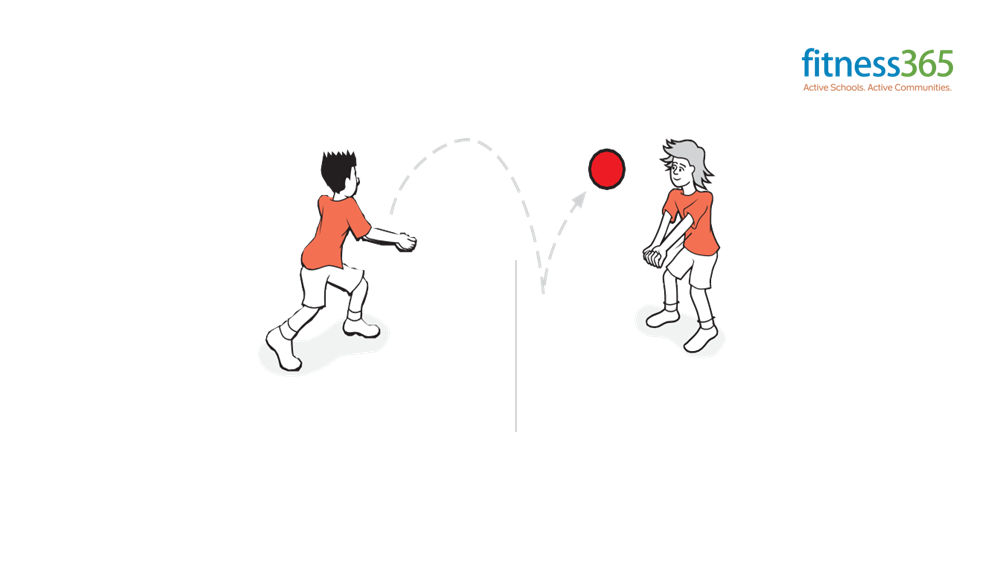
- practice one-handed strike with your partner – hit the ball with the underhand striking pattern so that it crosses over the line and bounces on the other side, then your partner returns the ball to you so that it bounces on your side of the line
- practice striking with either hand over the line
- see how many times you and your partner can strike the ball back and forth over the line – the ball bounces once each time before you volley it back over
- repeat the activities above, but this time with the bump (two forearms) pattern
With a low net
(The low net could be elastic tied between two chairs, two-pole uprights or two tall cones with a rope drawn between them).
Repeat the sequence of tasks described above, and:
- slant your net from high to low, so that you are practicing volleying the ball over the net at differing heights
- practice varying the force and the angles at which you volley the ball to your partner – let the ball bounce once on each side of the court before contact
- see how many volleys you and your partner can achieve without making a mistake (i.e. without letting the ball bounce twice in a row or hit the ceiling)
Variations
Vary skills and equipment: Use a soccer ball and kicking.