by Rashmi Sharma | Apr 17, 2020 | Fitness Activity
Instructions
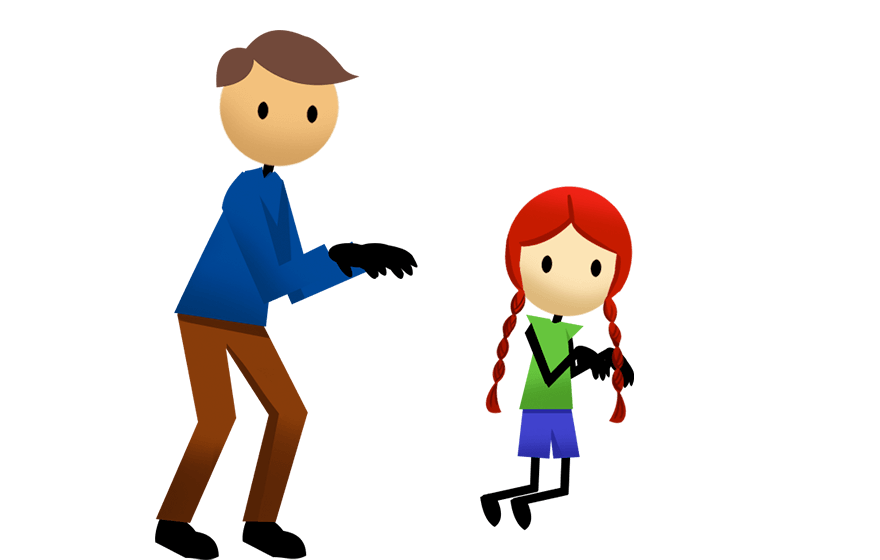
- Talk with your preschool child about kangaroos. How do kangaroos move?
- Show your child how to hop like a kangaroo. Hands are held in front of chest with elbows bent.
- Practice hopping with your child. Make sure they take off with both feet and land with both feet, bending knees slightly when they land.
- Play “Follow the Leader” hopping like kangaroos.
- If there are trees and playground equipment present, you can hop around and between these obstacles.
Variations
- If there are several children present, try having a kangaroo-hopping race
Benefits
This activity develops dynamic balance, coordination, and rhythm required for activities at older ages such as running, skipping, hopping, and dancing.
by Rashmi Sharma | Apr 17, 2020 | Fitness Activity
Requirements
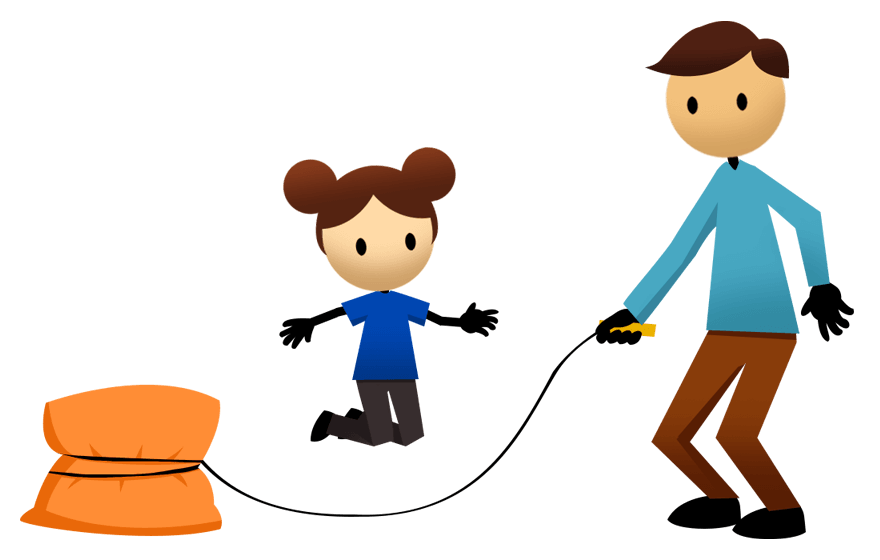
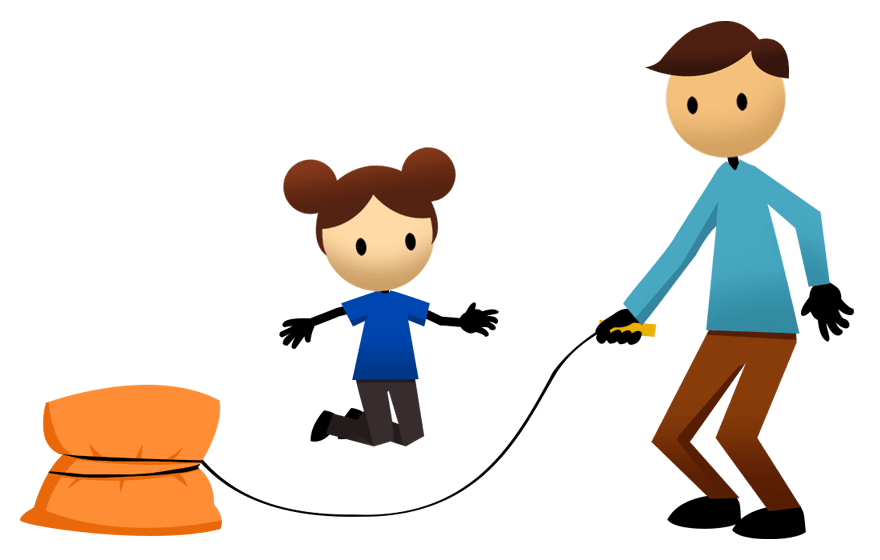
- Jump rope or thick string with a beanbag or stuffed animal tied to one end.
- Outdoor space or large indoor space free of obstacles.
Instructions
- Hold the rope at one end, or the string at the opposite end from the beanbag.
- Crouch down and turn the rope around you like a helicopter blade (you must change hands constantly).
- Keep the rope low to the ground.
- Encourage your child to jump over the rope each time it comes around.
Variations
- If this is too difficult for your child, try laying the rope on the ground and wiggling it side to side like a snake. Ask your child to “jump over the snake!”
Benefits
This activity develops rhythm, timing, and spatial perception.
by Rashmi Sharma | Apr 17, 2020 | Fitness Activity
Requirements
- Open outdoor space
- Jump rope or 4 metre standard nylon rope 6-12 mm diameter
- Two people to turn the rope for the child
- Or something to tie the rope to, and one person to turn the rope
Instructions
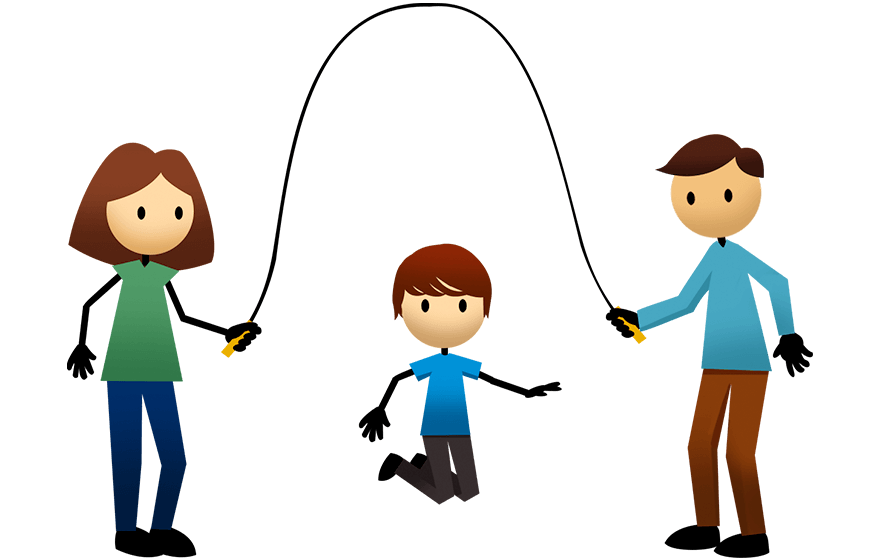
- If there is one adult present, tie one end of the rope to a fence or piece of playground equipment.
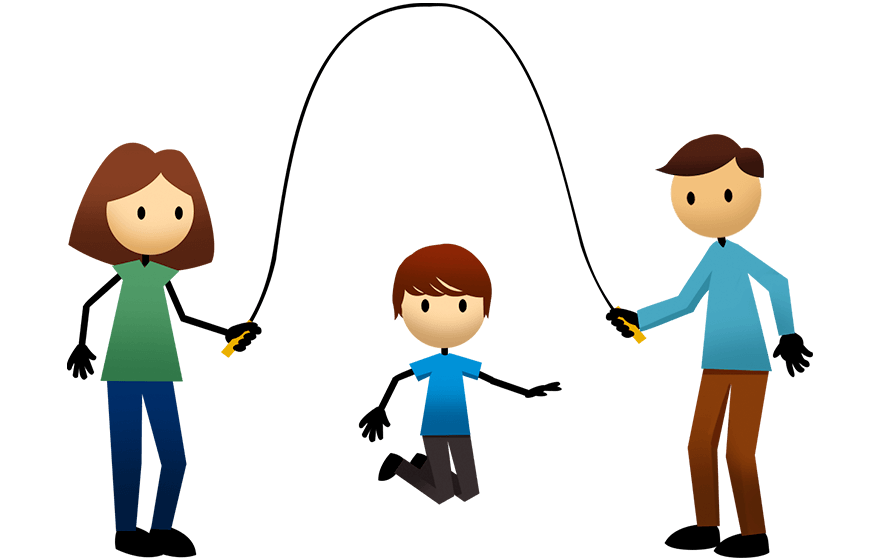
- If there are two adults present, each holds one end of the rope.
- Swing the rope over the child’s head in a circular motion.
- Each time the rope touches the ground, your child must jump over it.
- The rope should be rotating steadily and consistently.
- Rotate the rope slowly for beginners.
Variations
- Increase the speed of the rope rotation as the child masters the slower speeds
- Jump rope with only one foot, alternating feet with each rope rotation
- Turn 180 degrees with every jump
Benefits
This activity develops dynamic balance, coordination, and rhythm required for sports and activities such as volleyball, tennis, badminton, and dance.
by Rashmi Sharma | Apr 17, 2020 | Fitness Activity
Requirements
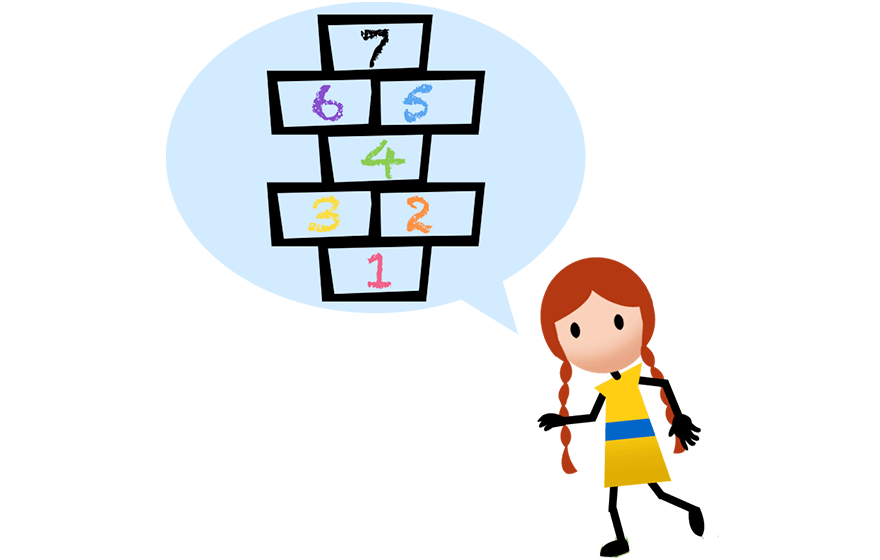
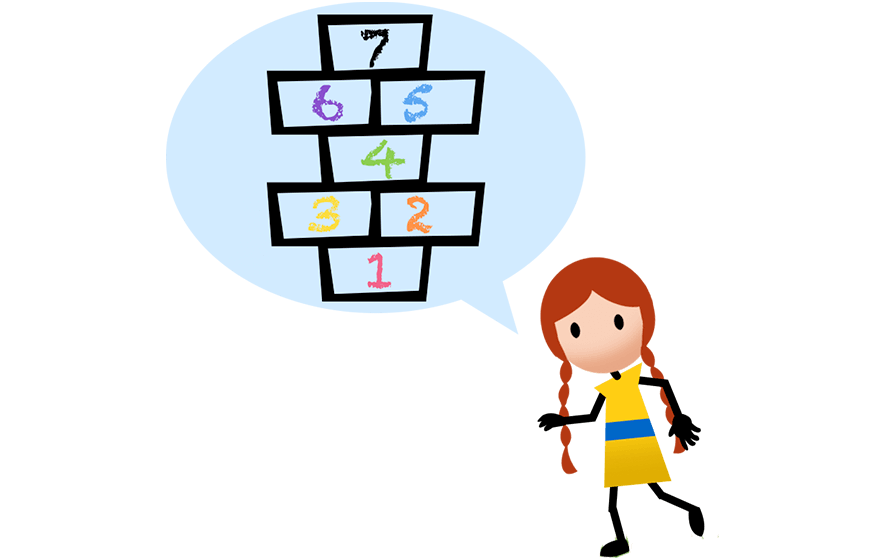
- A hopscotch grid or chalk to draw one
- A bean bag, small stick or rock to use as a marker
Instructions
- Line up in front of the hopscotch grid.
- First in line tosses the marker onto square 1.
- Hop over square 1 and hop through all the other squares on one foot.
- At the end of the grid, turn around and hop all the way back on one foot.
- Pause to pick up the marker from the square.
- Finish hopping back to the start.
- Throw the marker into square 2 and go again.
- Repeat until you have done the hopscotch grid with the marker in every square.NOTE: When you see two free squares side by side, you land one foot in each square at the same time before continuing on one foot.
RULE: If a player steps into the square with the marker, touches any lines, or touches the ground with any body part other than the one foot, that player starts again at square 1.
Variations
- Try different hopping actions to go through the course (alternate foot, feet together, hopping backwards, etc.)
- Make up your own hopscotch grid if chalk is available
Benefits
This activity develops dynamic balance, coordination, and rhythm required for activities at older ages such as running, skipping, hopping, and dancing.
by Rashmi Sharma | Apr 17, 2020 | Fitness Activity
Requirements
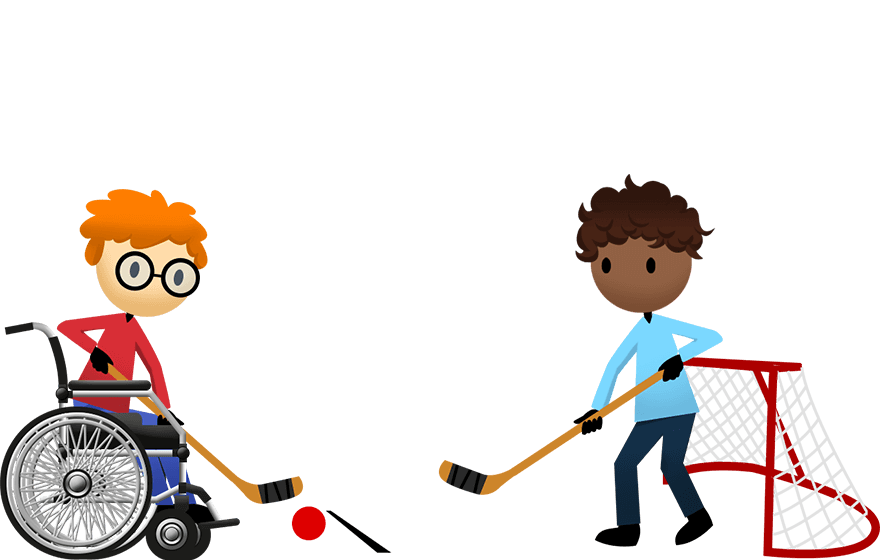
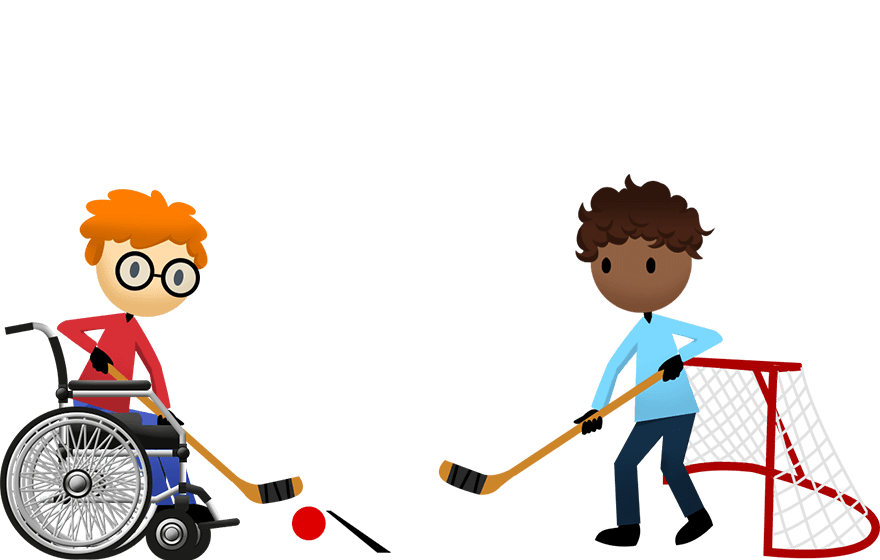
- Gymnasium or outdoor space with hard ground surface, street hockey ball, hockey stick, hockey net.
Instructions
- Set up the hockey net with a wall behind it, and then lay down markers 2, 3, 4, and 5 metres from the net.
- Children take turns shooting at the net, starting at 2 metres and then moving to the next marker each time they score.
- Goalies are optional. Add a goalie only if the child wants a greater challenge.
Variations
- If you want to make shooting easier, try using lighter, softer, and bigger balls.
- Try using shorter, lighter sticks for greater control.
- Use cones or rags to mark the goal, and then you can adjust the goal to any size.
Benefits
This activity develops striking skills together with core strength.
by Rashmi Sharma | Apr 17, 2020 | Fitness Activity

Requirements
- Open space (indoor or outdoor) with hard floor surface at least 3m by 5m
- Building wall without windows or tall fence to shoot against
- Street hockey ball or lightweight plastic ball with holes
- Plastic or wooden hockey sticks (child-size)
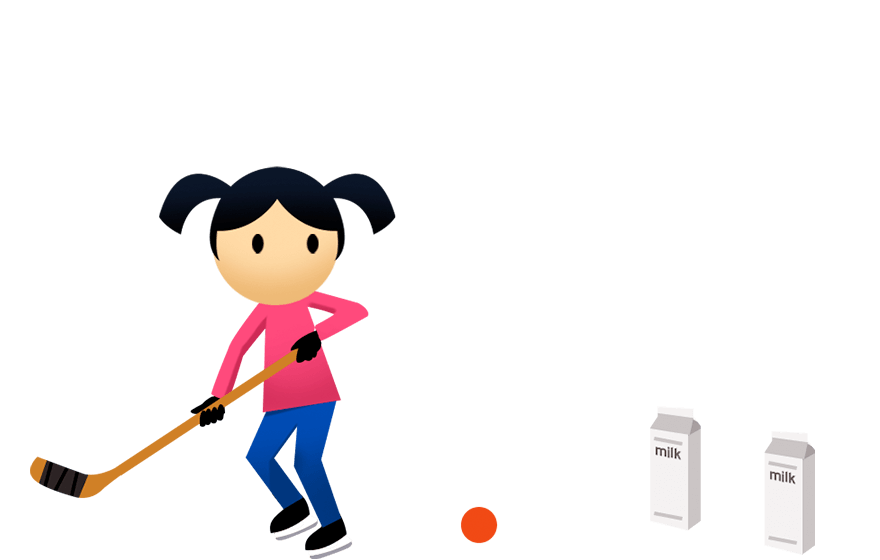
- 2 empty milk cartons, large yoghurt containers or other objects for goal posts
Instructions
- Place your 2 goal posts 2 metres apart beside the fence or wall.
- Show your child how to hit a hockey slap shot.
- Stand to one side of the ball with feet shoulder width apart.
- Hold your hockey stick with hands apart 20-30 cm.
- Imagine a straight line drawn between the toes of your two feet. This line should point at the goal.
- Reach for the ball with your hockey stick. Your arms should be comfortably extended.
- Lift the blade of your stick straight back until it reaches your shoulder height, then swing to hit the ball.
- Practice shooting without a goalie.
- Celebrate goals!
Variations
- Practice some wrist shots – simply hold the blade against the ball, then quickly twist or “snap” your wrists to propel the ball at goal
Benefits
This activity develops hand-eye coordination and timing while using a hockey stick (i.e., striking tool). These skills also transfer to striking with a bat or racquet.