by Rashmi Sharma | Apr 18, 2020 | Fitness Activity
Requirements
- A beanbag, soft foam ball, or sock ball (made by stuffing two socks into one another)
Instructions
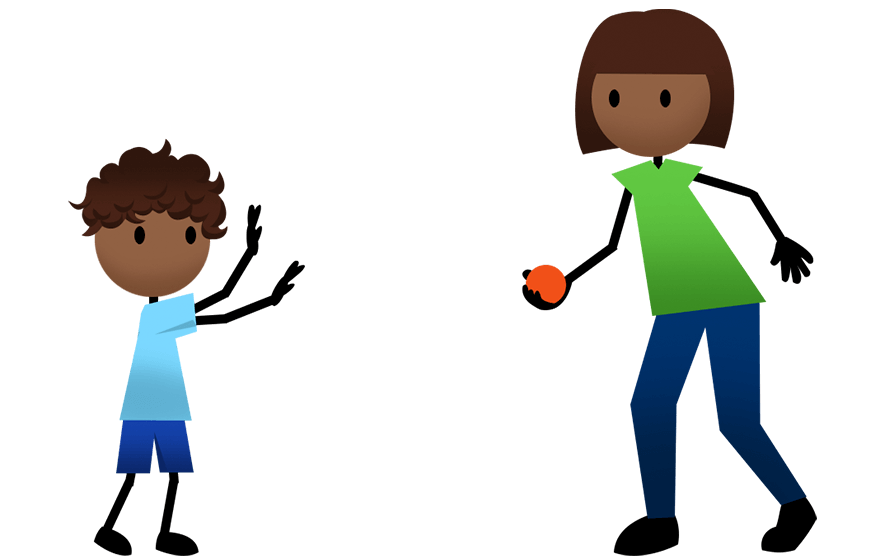
- Show your child the overhand catching stance: hands at head height, palms forward, fingers separated and pointing upward, thumbs side-by-side and almost touching (they should nearly form a ‘W’ with the index fingers).
- Stand 2-3 metres from your child and gently toss the ball into his or her hands.
- If your child has difficulty catching the ball, move closer.
- As your child begins to catch the ball consistently, move farther away. See how far away your child can catch the ball.
- Keep your ball tosses at head height.
Variations
- At distances of 5-10 metres, toss the ball slightly to each side – child should move their feet to get behind and under the ball
Benefits
This activity develops hand-eye coordination, fine motor control, and the ability to track moving objects in the air. These skills transfer to sports and activities that involve flying objects (e.g., balls, shuttlecocks, frisbees, ribbons, sticks, batons).
by Rashmi Sharma | Apr 18, 2020 | Fitness Activity

Requirements
• Beanbags, foam balls or tennis balls
• Hula hoops or rope / ribbons to make large rings
• Pieces of cardboard to mark “golf tees”
• Large outdoor space (backyard, local park)
Instructions
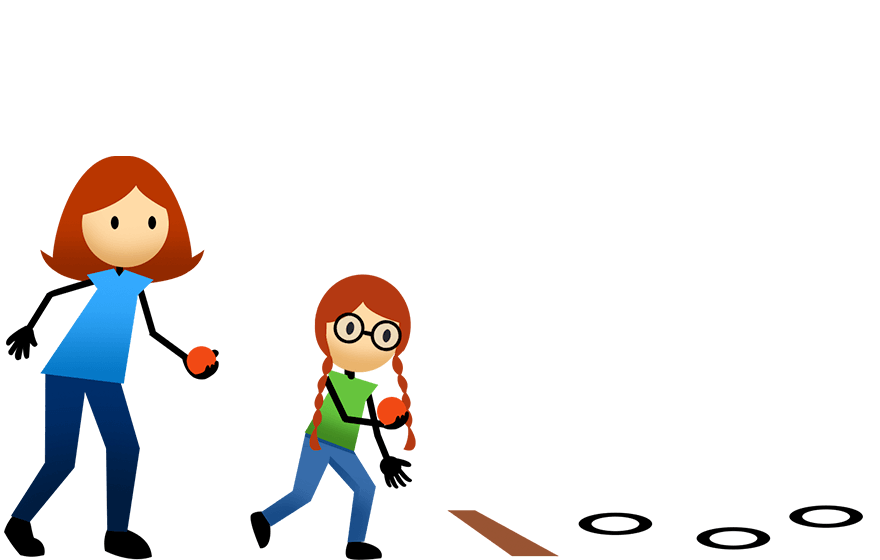
- Create outdoor “golf holes” using hula hoops, or make large rings on the ground using rope or ribbon.
- Place scraps of cardboard on the ground to mark “golf tees” where you throw from.
- With your child, take turns tossing a beanbag or ball underhand from each tee to the appropriate golf hole.
- After each of you has tossed from the tee, go to where your ball has landed and toss at the golf hole again.
- Continue until you get the ball to rest inside the golf hole.
- Count how many tosses it took you to get the ball to rest inside the golf hole.
- Go around the circuit of “golf holes” and keep track of your total number of tosses.
- If your child is very small, consider having different tees with different distances for parent and child.
Variations
• As your child masters the game using short distance tosses, challenge them by increasing the distances.
• After your child masters the underhand throw, play again using overhand throws.
Benefits
This activity develops coordination of arms and torso, fine motor control, and the ability to “read” distances. These skills transfer to sports and activities that involve throwing an object accurately over a perceived distance (e.g., balls, frisbees, ribbons, sticks, batons).
by Rashmi Sharma | Apr 18, 2020 | Fitness Activity
Requirements
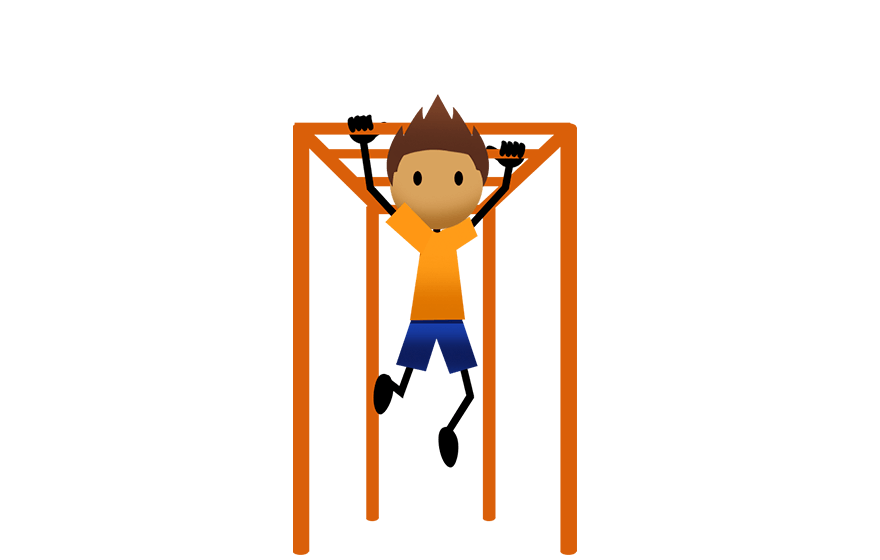
• Playground with monkey bars
Instructions
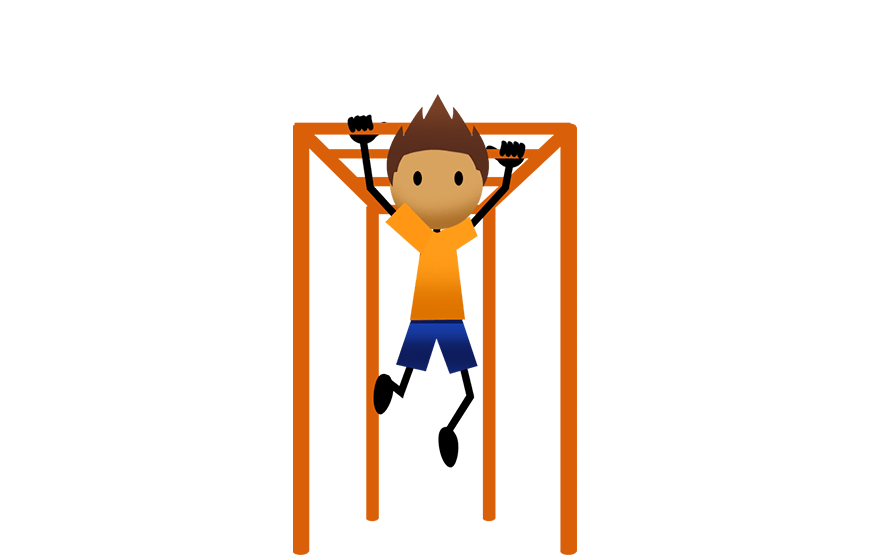
- Encourage your child to hang on the monkey bars and swing.
- Hang with both hands on one bar and simply swing forward and backward.
- Hang from the horizontal ladder and try to move along it by alternating hands.TIP: Depending on the height of the bars and the size of your child, you should “spot” your child by staying close and being ready to catch them.TIP: Your child should swing their legs to swing their full body.
Variations
• If the bar is not too high, encourage your child to swing forward and jump.
• Challenge your child to try swinging with only their right hand.
• Challenge your child to try swinging with only their left hand.
Benefits
This activity develops coordination of legs, arms and torso, plus dynamic balance and body proprioception. These skills transfer to sports and activities that involve dynamic balance and proprioception (e.g., gymnastics, aerial diving, martial arts, dance, soccer, basketball, hockey, volleyball).
by Rashmi Sharma | Apr 18, 2020 | Fitness Activity
Requirements
Instructions
- In Mirror Mirror, two partners face each other. One person is the “mirror master” and makes body movements. The other person must copy or “mirror” the movements.
- For the first try, stand facing your child with a small space between you.
- As you wave your arms, jump, step, wiggle, bend or otherwise move, your child must try to “mirror” your movement.
- After your child has imitated you for a few minutes, let your child be the mirror master.
- Try different fundamental movements such as hopping, jumping, spinning, skipping, and running on the spot.
Variations
- Try different movement themes – the mirror master can imagine he or she is a hockey player, a firefighter, James Bond, or anyone else who does a lot of moving.
Benefits
This activity develops coordination and balance as kids try to imitate the movements of their parent or play partner.
by Rashmi Sharma | Apr 17, 2020 | Fitness Activity
Requirements
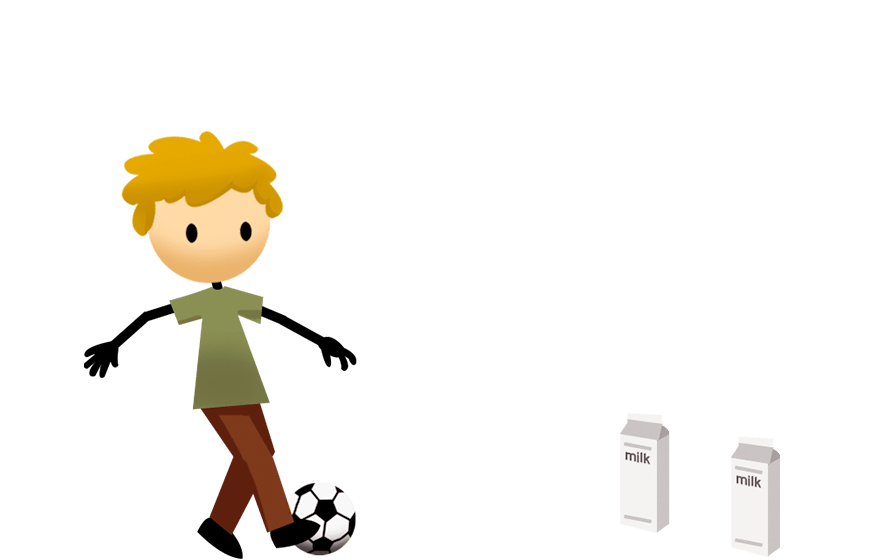
- Open and flat outdoor space at least 5m by 10m
- Soccer ball
- 2 empty milk cartons, large yoghurt containers or other objects for goal posts
Instructions
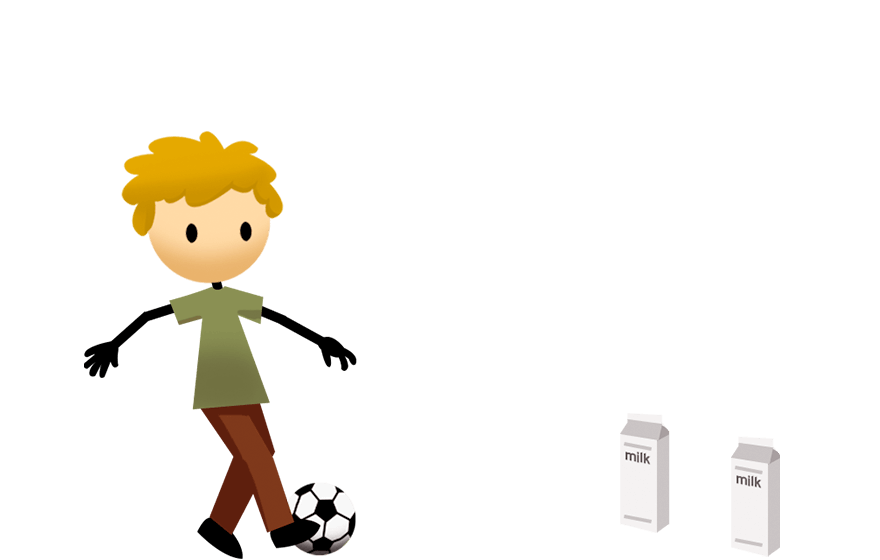
- In a flat, open outdoor space, place your 2 goalposts on the ground 1 metre apart.
- Parent stands 2-4 metres away from goal, and child stands 2-4 metres on other side facing.
- Show your child how to kick with the side of your foot.
- Start behind the ball and step forward to plant your standing foot 10-15cm away to one side of the ball.TIP: Make sure the toes of your standing foot are pointed at the goal.
- Follow by swinging your kicking foot, and contact the ball with the inner side of your foot.TIP: Shape your kicking leg like a hockey stick (foot turned outwards).
TIP: Bend the knee of your standing leg a little, and also bend the knee of your kicking leg.
TIP: Plant your standing leg beside the ball, 10-15cm away, with toes pointed at the goal.
- Pass the ball back and forth through the goal.TIP: Each time you receive a pass, stop the ball with the side of your foot. Raise your foot a bit off the ground.
- Try to pass through the goal each time. Shorten the distance if necessary for success.
Variations
- As your child’s kicking improves, try keeping score as a team – count how many consecutive successful passes you can make together through the goal – if one of you misses, start a new count and try to improve your score.
- Try to play one-touch passing – pass very softly from close distance, and each of you has to pass back without first stopping the ball (like tennis) – count how many consecutive passes you can make like this
Benefits
This activity develops leg coordination, strength and fine motor control in the lower body. These skills transfer to sports and activities that involve kicking an object (e.g., soccer, football, martial arts).
by Rashmi Sharma | Apr 17, 2020 | Fitness Activity
Requirements
- Open and flat outdoor space at least 5m by 10m
- Soccer goal, or tall fence, hedge, or building wall without windows
- Soccer ball
- 2 empty milk cartons, large yoghurt containers, or other objects for goal posts
Instructions
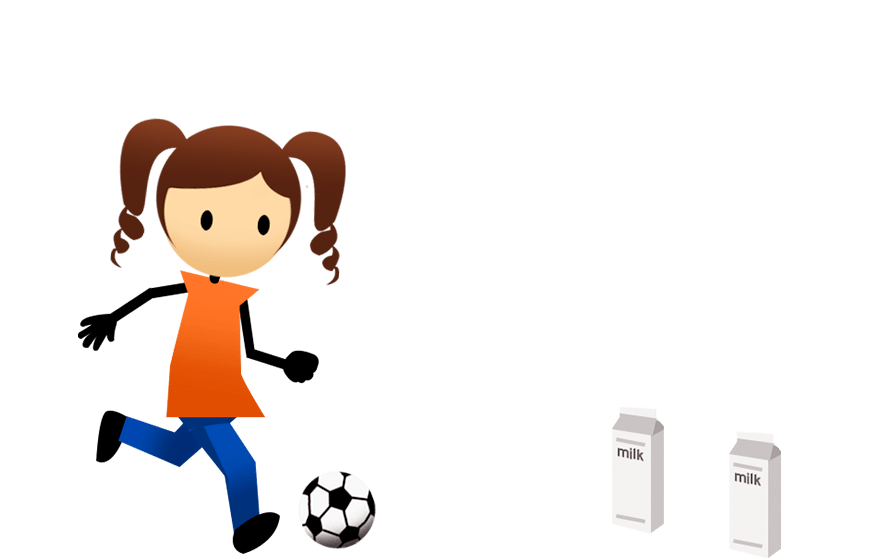
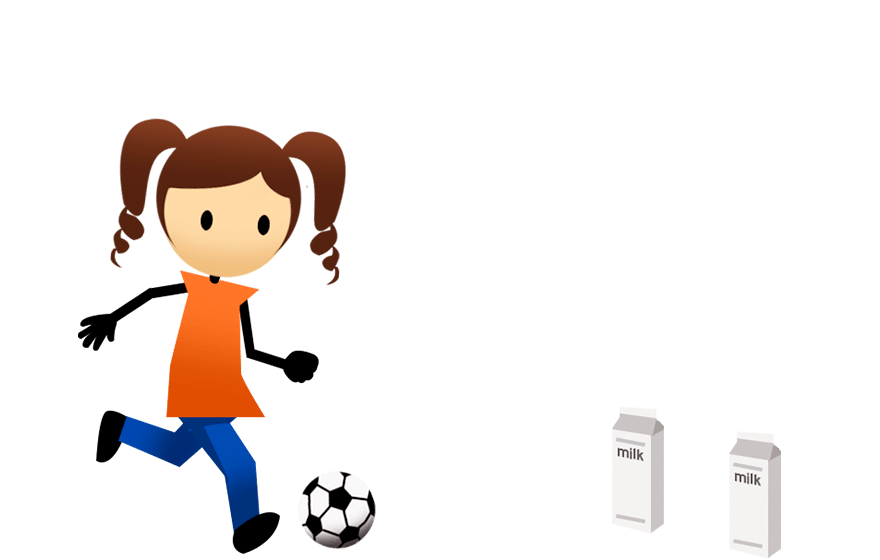
- If you don’t have access to a soccer goal, create your own goal. Place 2 milk cartons, yoghurt containers, or other objects 3-4 metres apart beside a tall fence, hedge or wall.
- Show your child how to kick a soccer ball with the instep (the “laces” on your kicking foot).
- Start behind the ball and step forward to plant your standing foot 10-15cm away to one side of the ball.TIP: Make sure the toes of your standing foot are pointed at the goal.
- As you step, follow by swinging your kicking foot, and contact the ball with your laces, toes pointing straight down.TIP: Bend the knee of your standing leg slightly, and do the same with your kicking leg.
- Once your child understands how to kick with the instep, encourage he or she to shoot on you in goal.
- Choose shooting distance based on size and strength of your child.
- Practice for no more than 15 minutes at one time, as kicking leg will get tired.
- Celebrate goals!TIP: Your child is NOT allowed to kick with toes. This is bad technique.
TIP: Very few 5-6 year olds will be strong enough to do instep kicks.
Variations
- Most people are dominant in one foot when they kick (usually the right foot) – after your child has some success kicking with the dominant foot, practice kicking with the other foot
Benefits
This activity develops leg coordination, strength and fine motor control in the lower body. These skills transfer to sports and activities that involve kicking an object (e.g., soccer, football, martial arts).