by Santosh | Jun 3, 2020 | Fitness Activity
LEARNING OUTCOME
- Travels demonstrating a variety of relationships with objects
- Shares equipment and space with others
STUDENT TARGETS
Skill: I will travel safely within the activity area moving around my teammates as we “move our train.”
Cognitive: I will be able to explain what sharing and cooperation mean during group discussion.
Fitness: I will actively participate in physical education while following class rules and protocols.
Personal & Social Responsibility: I will work independently with my teammates with no more than one rule reminder from the teacher.
TEACHING CUES
ACTIVITY SET-UP & PROCEDURE
Equipment:
- 1 beanbag per group of 5 or 6 students
- 2 cones per group of 5 or 6 students
Set-Up:
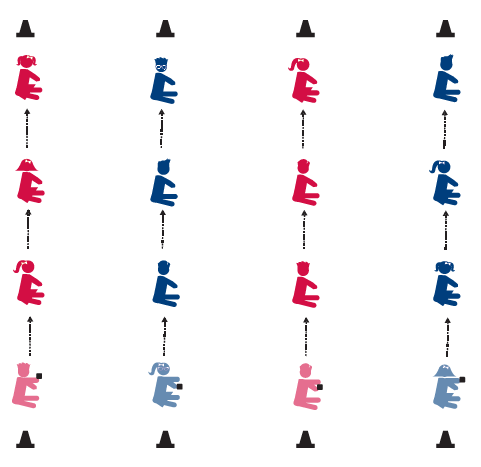
- Using cones, form 2 parallel lines approximately 20 feet apart. Number the cones across from each other 1 and 2.
- Send groups of 5 or 6 students to a set of cones with 1 beanbag for the group.
- Each group sits side-by-side in a single file between cones 1 and 2, starting next to the cone number 1.
- The beanbag begins with the student closest to cone 1.
Activity Procedures:
- It’s time to send the train down the tracks!
- On “Go”, the student with the beanbag will pass it to the next person. As soon as the pass is made, that student will get up and walk quickly to sit at the other end of the line. This sequence continues until the
line makes it to the other end of the area and a student sits next to cone number 2.
- At cone number 2, tap the beanbag to the cone and then use the same process to send it back down
the tracks toward cone number 1. Continue until you hear the stop signal.
COOL DOWN/ CLOSURE
Review Skill/Activity, stretching, and questions.
by Santosh | Jun 3, 2020 | Fitness Activity
LEARNING OUTCOMES
Accepts responsibility for class protocols with behaviour and performance actions.
STUDENT TARGETS
Skill: I will move safely in self-space.
Cognitive: I will recognize and define at least 1 academic language vocabulary word.
Fitness: I will actively participate in the activity while following class rules and protocol.
Personal & Social Responsibility: I will listen to my classmates’ instructions and respond appropriately.
TEACHING CUES
- Ask
- Listen
- Respond Appropriately
ACTIVITY SET-UP & PROCEDURE
EQUIPMENT:
- 1 beanbag per student
- 1 cone per group of 5 or 6 students
SET-UP:
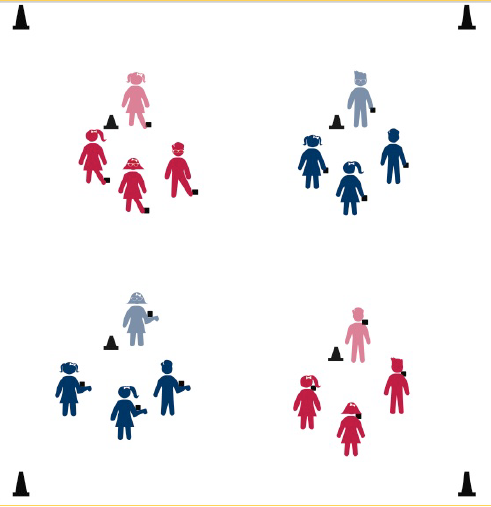
- Send groups of 5 or 6 students to a cone, each student with a beanbag.
- One student is the Patient and stands next to the cone. The other students are Doctors and form an arc around the Patient.
ACTIVITY PROCEDURES:
- It’s time to play Beanbag Bandage. The Patient was injured at recess and the doctors need to figure out where to put the bandage.
- Altogether, the doctors will ask, “Where does it hurt?” The Patient picks a body part to call out and places the beanbag over the injury. For example, “My elbow hurts!”
- All of the doctors follow along by also placing beanbags on their elbows and saying, “All bandaged up! Is that better?” The patient says, “Yes, thank you!”
- The doctors ask again, “Where does it hurt?” The Patient says another body part, “My toes hurt!” This continues until the teacher stops play and chooses new Patients.
COOL DOWN/ CLOSURE
Review Skill/Activity, stretching, and questions.
by Santosh | Jun 2, 2020 | Fitness Activity
LEARNING OUTCOME
Dribbles using the dominant hand while walking in general space
STUDENT TARGETS
Skill: I will continuously dribble the basketball.
Cognitive: I will discuss the things that made this activity challenging.
Fitness: I will actively engage in class to improve my dribbling skills.
Personal & Social Responsibility: I will work through this activity’s challenges to improve my skills.
TEACHING CUES
- Body is Steady
- Dribble with a Push from Arm and Fingers
ACTIVITY SET-UP AND PROCEDURE
EQUIPMENT:
- 4 large cones
- 1 basketball per student
- 1 poly spot per student
- 1 bean bag per student
SET-UP:
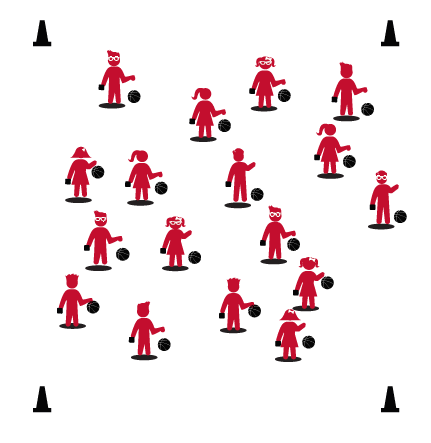
- Create boundaries for a large activity area with cones.
- Scatter poly spots throughout the area.
- Each student to a poly spot with a ball and a bean bag.
ACTIVITY PROCEDURES:
- Are you up for a Balance Ball challenge? We are going to practice dribbling with one hand while we balance a bean bag on top of the other hand.
- Put the bean bag on your hand. When I say, “GO!” begin dribbling and continue until you hear the stop signal.
COOL DOWN/ CLOSURE
Review Skill/Activity, stretching, and questions.
by Santosh | Jun 2, 2020 | Fitness Activity
LEARNING OUTCOME
Catches a self-tossed or well thrown large ball with hands, not trapping or cradling against the body
STUDENT TARGETS
Skill: I will pass the ball to the wall target using a force that is safe for everyone.
Cognitive: I will describe a strong pass and a light pass during class discussion.
Fitness: I will actively engage in class to collect as many activity minutes as I can.
Personal & Social Responsibility: I will follow teacher directions for safe participation and proper use of equipment.
TEACHING CUES
- Thumbs Behind Ball, Fingers Spread, Step to Target, Push with 2 Hands
- Eyes on the Ball, Fingers Apart, Catch with Hands
ACTIVITY SET-UP & PROCEDURE
EQUIPMENT:
- 1 basketball per student
- 1 target card per student
SET-UP:
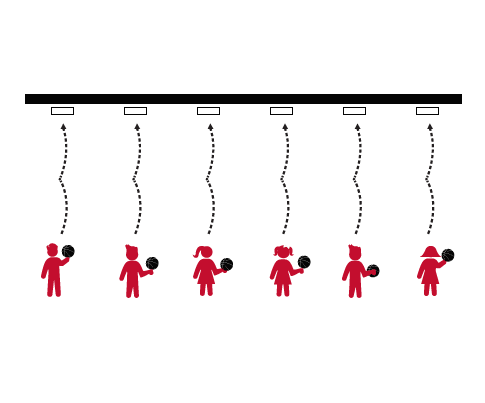
- Tape target cards to the wall at the same height as the students’ shoulders.
- Each student with a ball, standing approximately
- 5 feet away from a target.
ACTIVITY PROCEDURES:
- It’s time to work on our passing and catching with a Wall Passing game. When I say, “GO!” you’re going to pass the ball and hit the target. The ball is going to bounce back quickly, so be ready.
- Let the ball bounce 1 time on the floor and then catch it with your hands.
- In order to stay safe, make sure you’re far enough away from the wall so that the ball can bounce in between you and the target. Keep practicing until you hear the stop signal.
COOL DOWN/ CLOSURE
Review Skill/Activity, stretching, and questions.
by Santosh | Jun 2, 2020 | Fitness Activity
LEARNING OUTCOMES
Differentiates between fast and slow speeds, Differentiates between strong and light force.
STUDENT TARGETS
Skill: I will roll the ball on the floor using different speeds and pathways.
Cognitive: I will describe and demonstrate a zigzag pathway.
Fitness: I will actively engage in class to collect as many activity minutes as I can.
Personal & Social Responsibility: I will keep working on improving my skills, even when the activity is difficult.
TEACHING CUES
Finger Pad Touches, Slow and Controlled
ACTIVITY SET-UP & PROCEDURE
EQUIPMENT:
- 4 large cones
- 1 basketball per student
SET-UP:
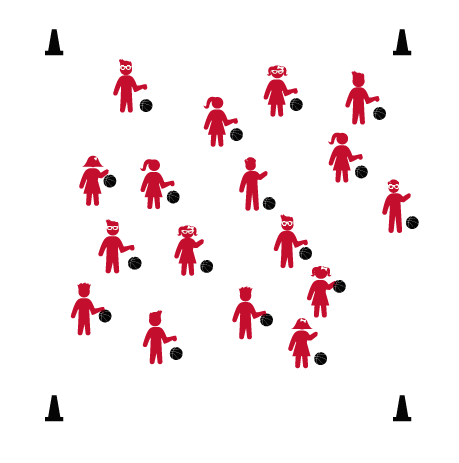
- Create boundaries for a large activity area with cones.
- Students scattered throughout area in self-space with a ball.
ACTIVITY PROCEDURES:
- It is time to work on controlling the ball with our finger pads by playing a game called Walk the Dog.
- Your basketball is a dog and it is time to take it out for a walk. Start with your feet shoulder width apart and the ball on the floor in front of your feet. Using only your finger pads, slowly roll the ball back and forth from left to right, one hand to the other. Can you roll the ball making different shapes? Using different pathways?
COOL DOWN/ CLOSURE
Review Skill/Activity, stretching, and questions.