by Santosh | Jun 8, 2020 | Fitness Activity
Movement skills/concepts
Static balance, body and space awareness.
Set-up
Mats.
Children, each with a mat, are spread out in a defined area with an even surface.
Activity
Who can balance while making …?
- narrow/wide/twisted/curl shape with your body in a standing position
- the same shape as above but resting on other part(s) of the body, (e.g. a wide shape while your hands and feet are on the ground)
- wide shape with your upper body and a narrow shape with your lower body
- twisted shape with your upper body and a curled shape with your lower body
- symmetrical/asymmetrical shape
- shape at different levels – low, medium and high
- the shape of a letter of the alphabet, (e.g. X, T, C, F, I, L, O, V, Y)
- number shape, (e.g. 7, 6, 2)
- the shape of the first letter of your name or your favourite number
Can you see …?
• children being creative
• tight muscles
• balancing like a statue – not moving
• eyes up
You could ask …
Which body shape made it easy to balance? Could you be pushed over in that shape?
Which body shape made it easy to be pushed over?
Variations
Create a shape story: Make up a travelling shape story, (e.g. move from a wide shape to a twisted shape to a curled shape). Keep the transitions smooth.
Make group shapes: As a small group, form simple three or four-letter words, (e.g. OAR, BIRD, SUN, CAT, MAN).
COOL DOWN/ CLOSURE
Review Skill/Activity, stretching, and questions.
by Santosh | Jun 8, 2020 | Fitness Activity
Movement skills/concepts
Pushing, pulling, balancing, counterbalancing and relationships (with others).
Set-up
Hoops.
Teach wrist grip.
Groups work on a suitable surface.
Activity
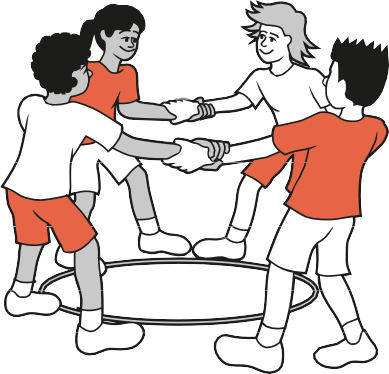
Hot spot: Groups use the wrist grip to join in a circle round a hot spot (a hoop or a similar ground marking). The aim is to pull the circle and make someone stand on the hot spot.
Socko: Place four or five gym mats together. Self-chosen groups of four–five children wear socks but no shoes. The aim is to remove the socks of other participants and to keep possession of your own socks. Set clear rules on the degree of roughness allowed. Allow anyone to withdraw or call ‘Stop’ at any time. No kicking.
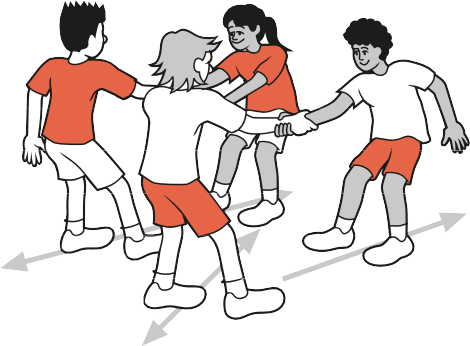
Zigzag tug of war: Two lines of three–four face each other. Each person takes a wrist grip with two people facing. Each line attempts to pull the other line to a mark.
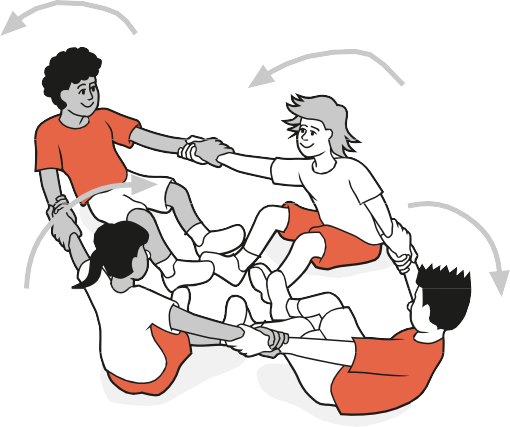
Rowing in fours: Four children sit in a circle joined by the wrist grip and with knees slightly bent. One pair of opposites leans in while the other pair leans back. Change positions rhythmically.
Can you see …?
• safety
• fair competition
You could ask …
Balancing and pulling in small groups requires a lot of trust. How did your group build trust?
by Santosh | Jun 5, 2020 | Fitness Activity
Movement skills/concepts
Pushing and pulling in pairs, resisting pushing and pulling, hopping, and relationships (with others).
Set-up
Children are in pairs of evenly matched skill on a suitable surface.
Teach the wrist grasp.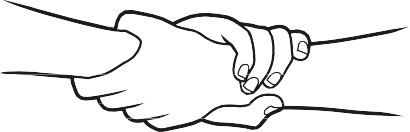
Activity
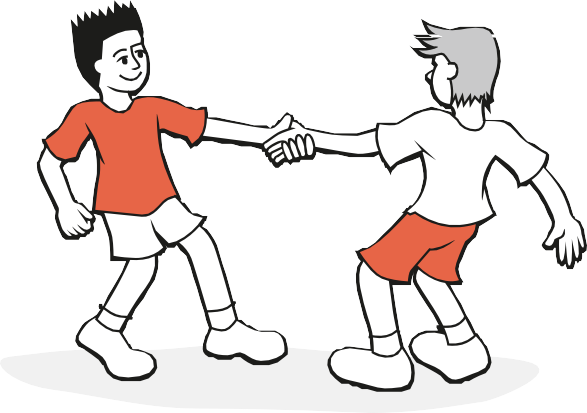
Two-handed tug of war: Partners face each other across a line and grasp one or both wrists. Each attempt to pull the other across the line. Next, try two hoops instead of the line.
Two-handed push: Partners face each other across a line and place their palms against the other’s palms. They both try to push their partner backwards so that they can walk across the line.
Hopping tug of war: Partners face each other, grasp wrists and raise one knee forward. They hop and pull until one contestant is forced to lower their leg.
Hopping push: Partners face each other with their hands on each other’s shoulders and one foot raised. Each tries to push their opponent back over a line while hopping. Signal change of feet frequently.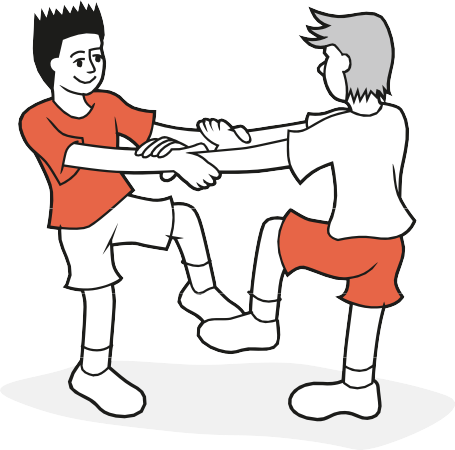
Turn the turtle: One child lies face down with arms and legs spread. Their partner tries to flip them onto their back.
Hand wrestle (Danish wrestling): Partners face each other, grasp one wrist with right/left hand and put an opposite foot forward. By pushing, pulling, and feinting, they try to make their partner move their front foot. The other foot may be moved to counter. A point is scored when the partner moves over their front foot.
Chinese boxing: Each partner holds the opponent’s right (left) wrist. The object is to touch the opponent’s shoulder.
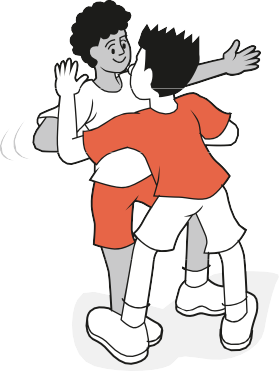
Foot tug: Hooking foot to foot, opponents try to pull each other across a line.
Hoop wrestle: Two hoops are placed so that they touch. Each partner stands in a hoop and places their hands on their opponent’s shoulders. Pairs wrestle until one partner is forced outside the hoop. Skipping ropes, chalk circles or parallel lines could be used.
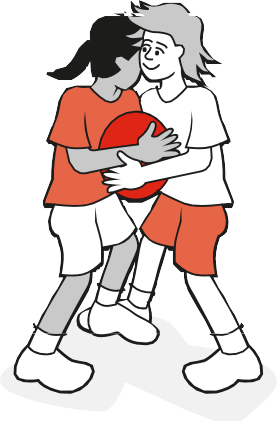
Ball tug: Partners face each other. Both grip a large ball, then try to pull each other across a line.
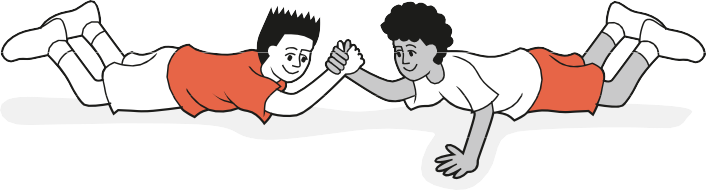
Indian wrestle: Partners lie on their stomachs facing each other. They grip right/left hands, with elbows on the ground and forearms upright. They try to make the back of their partner’s hand touch the ground.
Can you see …?
• evenly matched pairs
• strong, steady pushes and pulls
• strong grips
• friendly competition
• fair play and good sporting behaviour
You could ask …
What guidelines might you and your partner set up to enjoy these activities safely? What are examples of fair play and good sporting behaviour?
COOL DOWN/ CLOSURE
Review Skill/Activity, stretching, and questions.
by Santosh | Jun 4, 2020 | Fitness Activity
Movement skills/concepts
Dynamic balance; slow, sustained walking; and balancing.
Set-up
Hard court area.
Activity
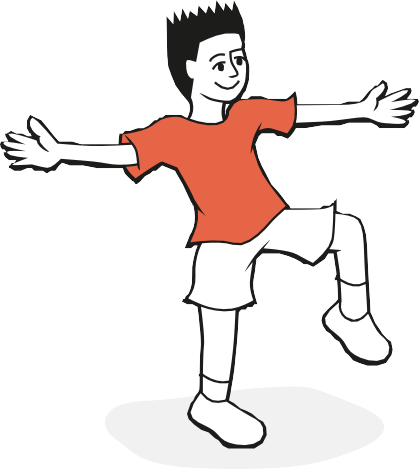
The aim of this race is to be the last to finish.
All children line up on the start line. On a signal, children race as slowly as they can to the finish line. Children must be moving at all times. Any child who stops is out of the race.
Can you see …?
• arms stretched out for balance
You could ask …
How will you keep your balance when you are moving slowly?
Variations
Vary locomotor skill: Use hopping, walking or jumping.
COOL DOWN/ CLOSURE
Review Skill/Activity, stretching, and questions.
by Santosh | Jun 4, 2020 | Fitness Activity
Movement skills/concepts
Static balance, throwing, running, and relationships (with others).
Set-up
Mats, balls.
Groups of five–seven, with a ball per group. Children are standing, lined up one behind the other with their feet spread in a straddle position.
Activity
Roll to the back: The child at the front of the line rolls the ball under everyone’s legs to the back person, who retrieves the ball and runs to the front. Repeat in the new positions.
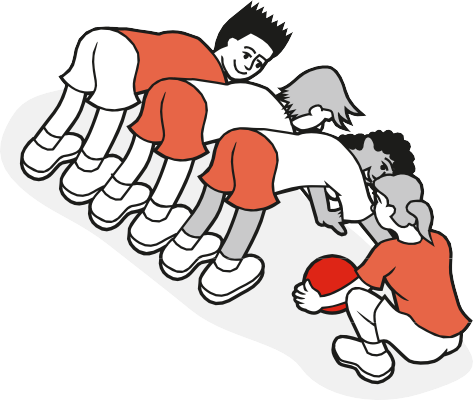
Front support: Two children are at either end of a ‘tunnel’ created by the rest of the group, who begin on hands and knees side by side on the floor and then, on a signal, lift up into a front support to form the tunnel. The child in front of the tunnel rolls the ball to the child at the back, who then runs to the front. The child at the front joins the start of the tunnel and the child at the end of the tunnel disengages from the tunnel to receive the ball.
Can you see …?
• tight muscles
• being still
You could ask …
How can you hold the front support position?
Variations
Vary static balance position: Try a ‘V’ sit or back support, and throw the ball over and roll under. Have a race with another group and see who finishes first.
COOL DOWN/ CLOSURE
Review Skill/Activity, stretching, and questions.