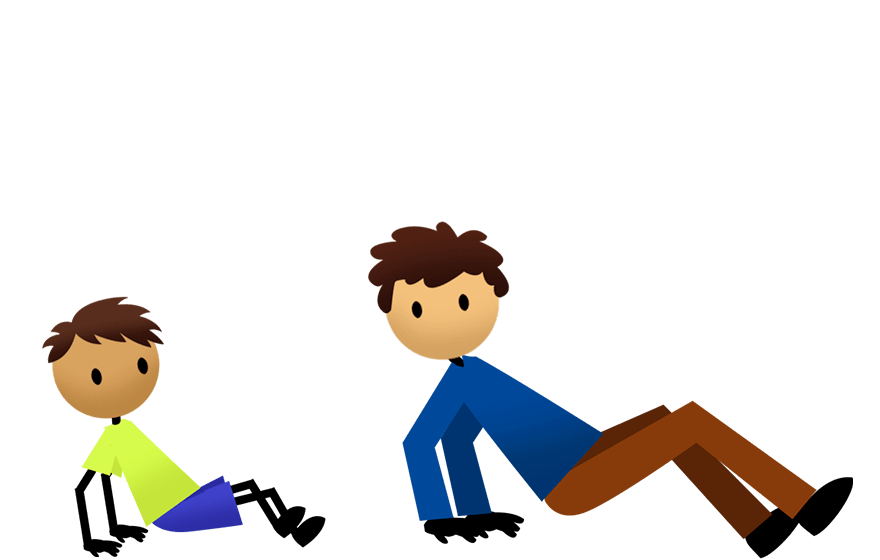
Crab Walk

Crab Walk

Requirements

• Flat and level indoor or outdoor space at least 3m by 5m
• Dry lawn or carpet recommended

Instructions

  1. In a flat, open area, show your child how to crab walk.
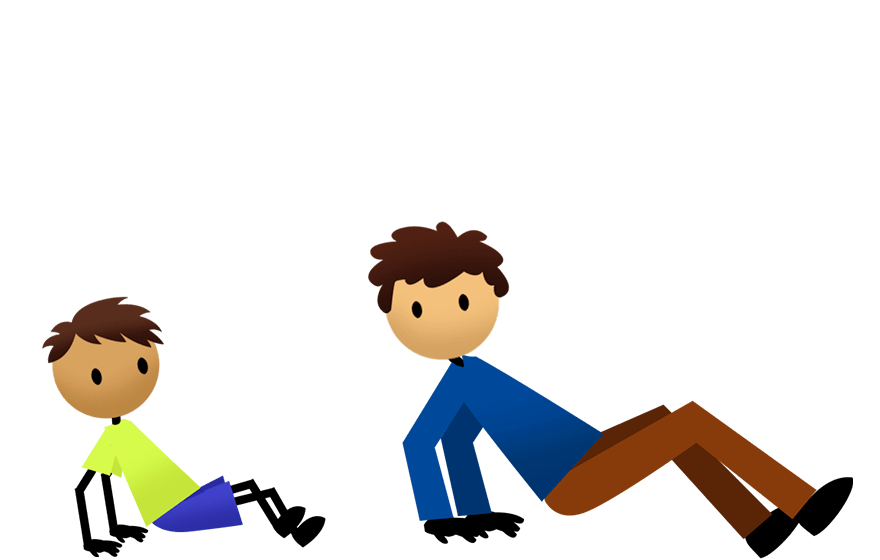
  2. Squat on ground, place hands behind you, and lift your hips off the ground.
  3. Start “walking” using hands and feet.
  4. Play follow the leader as you crab walk.

Variations

• Challenge your child to a crab walk race over a short distance.
• If several children are present, play a game of tag in a confined area while crab walking.

Benefits

This activity develops coordination, balance, and strength as kids try to imitate the movements of a crab.
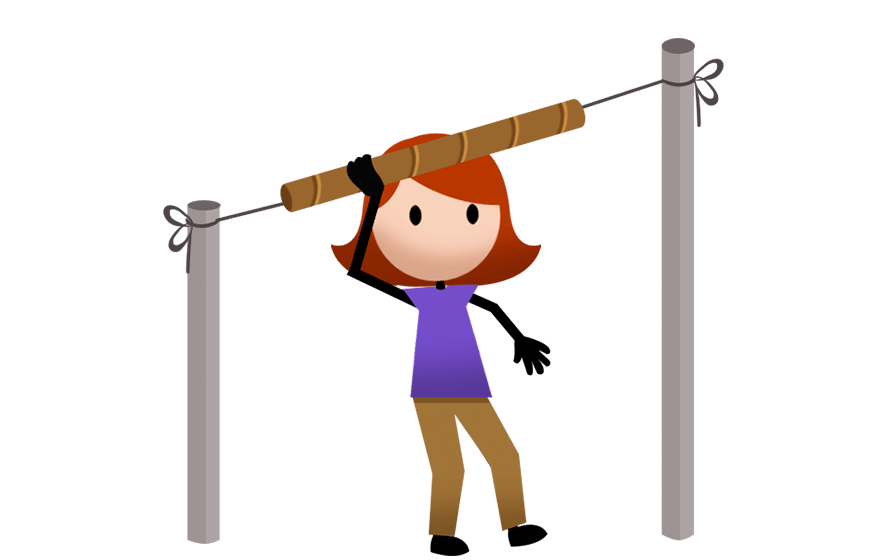
Cardboard Javelin

Cardboard Javelin

Requirements

• Empty cardboard tubes from wrapping paper
• String, twine, or thin rope 5-8 metres long (the “line”)
• Outdoor space with objects such as trees and fence posts to tie both ends of the line

Instructions

  1. Pass one end of the string, twine, or rope though the hollow cardboard tube.
  2. Tie one end of the line to a firm object at the height of your child’s ear.
  3. Tie the other end to a firm object at a slightly greater height.
  4. Challenge your child to stand at the low end and “throw” the tube along the line.
  5. See how far your child can throw.
  6. Continue practicing and try to improve the distance each time.

Variations

• Be sure to practice throwing with both hands.

Benefits

This activity develops coordination of arms and torso, fine motor control, and the ability to “read” distances. These skills transfer to sports and activities that involve throwing an object accurately over a perceived distance (e.g., balls, javelins, frisbees, ribbons, sticks, batons).

Bucket Toss Golf

Bucket Toss Golf

Requirements

  • Beanbags, soft foam balls, or balls of socks
  • Buckets, laundry baskets, or large cardboard boxes
  • Pieces of cardboard, or paper to mark “golf tees”

Instructions

  1. Create a series of “golf holes” by placing the buckets, baskets or boxes around your living room, hallways and other available spaces.
  2. Place scraps of cardboard or paper on the floor to mark “golf tees” where you throw from.
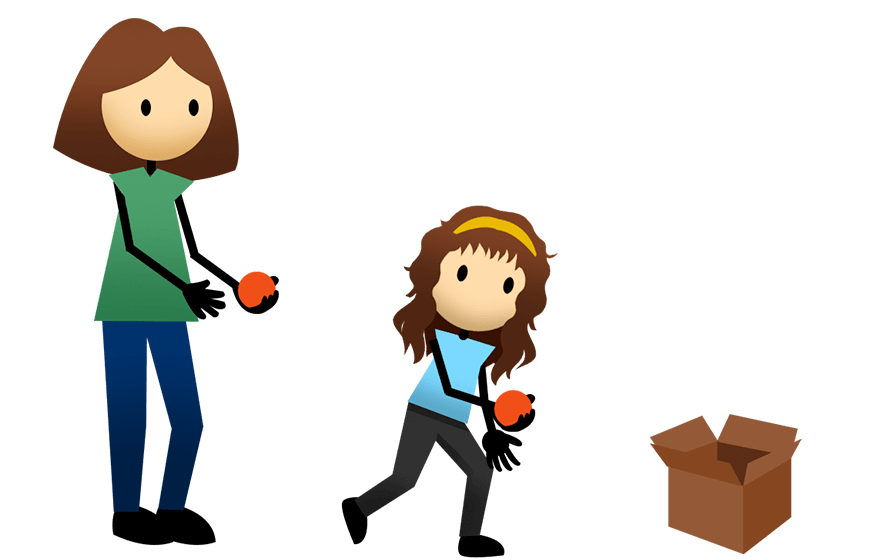
  3. With your child, take turns standing on each golf tee and tossing a beanbag or ball underhand into the bucket, basket or box.
  4. Continue tossing at each hole until each of you sinks one shot.
  5. Go around the circuit of “golf holes” and keep track of how many tosses each of you requires to sink a shot at each hole.
  6. If your child has too much difficulty sinking shots, consider having different tees with different distances for parent and child.

Variations

  • As your child masters the game using short distance tosses, challenge them by increasing the distances
  • After your child masters the underhand throw, play again using overhand throws

Benefits

This activity develops coordination of arms and torso, fine motor control, and the ability to “read” distances. These skills transfer to sports and activities that involve throwing an object accurately over a perceived distance (e.g., balls, frisbees, ribbons, sticks, batons).

Bowling Milk Cartons

Bowling Milk Cartons

Requirements

  • Large hard surface such as driveway, sidewalk, garage, or basement room
  • Large round ball such as basketball or soccer ball
  • Old milk cartons or plastic drink bottles
  • Small amount of sand or soil

Instructions

  1. Collect a few empty milk cartons or plastic drink bottles and fill the bottoms with 2 cm of garden soil, sand or gravel.
  2. Set up the cartons or drink bottles as bowling targets at the top end of a driveway beside your house, inside your garage, or inside a large basement room without breakable objects.
  3. Choose a place where you and your child will bowl from. You might want to let your child bowl from a shorter distance than you.
  4. Show your child how to do a basic bowling action.
  5. If you are bowling right-handed, your left leg should step forward as you bowl. If you are bowling left-handed, your right leg should step forward.

    TIP: Your throwing hand should come from straight behind and under your shoulder, almost brushing your leg.

  6. Take turns bowling and trying to knock down the cartons or plastic bottles.

Variations

  • As your child’s throwing improves, try making a game where you keep score – each milk carton can be worth 1-3 points

Benefits

This activity develops coordination of arms and torso, fine motor control, and the ability to “read” distances. These skills transfer to sports and activities that involve throwing an object accurately over a perceived distance (e.g., balls, frisbees, ribbons, sticks, batons).

Bounce and Catch

Bounce and Catch

Requirements

  • 2-3 different bouncy balls (e.g. large inflated bouncy ball, tennis ball, solid rubber ball)

Instructions

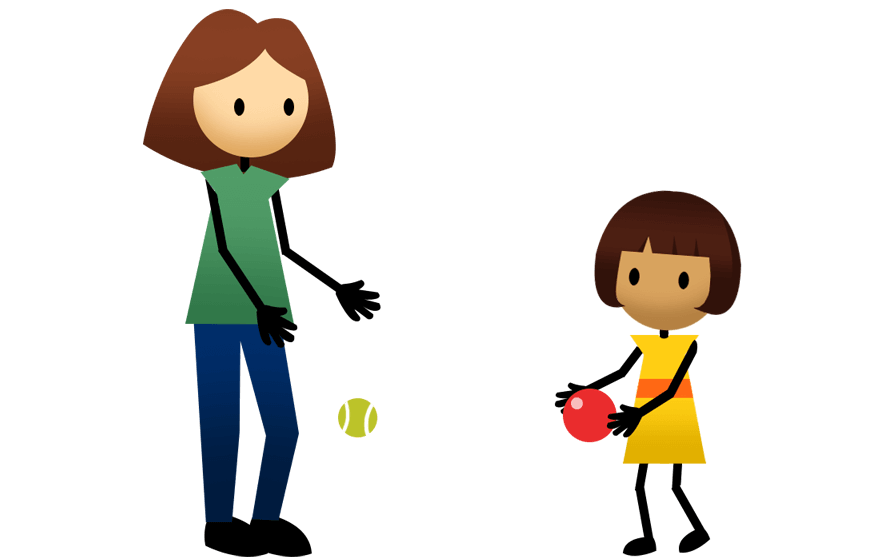
  1. Show your child how to drop a ball, let it bounce once, and then catch.
  2. Encourage your child to drop and catch the ball many times in a row.
  3. Let your child try different sizes of balls, and start with balls that are easier to catch (e.g. larger balls).

Variations

  • If it helps, children with physical disabilities can sit down while bouncing and catching, so their hands are free to catch.

Benefits

This activity develops hand-eye coordination, as well as fine motor control of the hands and fingers.

close btn