by Neetu | Jun 8, 2020 | Sports
Movement skills/concepts
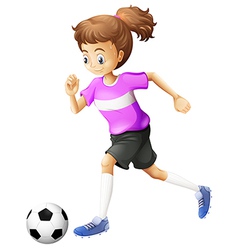
Kicking a stationary ball, kicking at different levels, speed, and flow, kicking at a target, and relationships (with objects).
Set-up
- Cones, ropes, tape/chalk to create shapes (targets) on wall/net, and a variety of balls (foam, plastic, rubber) for kicking.
- Children spread around a level grass or court area (gym, hall, or outside court), facing a wall or net to kick towards.
- A number of shapes are created as targets at different levels (ground, middle, and high).
Activity: Can you …?
- stand behind your ball and, using the inside part of your foot, kick it to the wall or net so that it comes back to you
- practice kicking with one foot and then the other foot
- practice kicking along the ground and then in the air
- practice kicking with a run-up of three to five steps
- practice kicking the ball at the different types of targets
- once you hit a target twice in a row, take a big step back and try a further distance away
Can you see …?
- planting the non-kicking foot next to the ball
- contacting behind the ball
- use of the inside of the foot for ground level, kicking the shoelace (top of shoe) for medium or low-level kicks
- leaning back slightly on contact
- following through in the intended direction of the kick
You could ask …
Which was your favorite target? Why?
What happened to the ball when you had a run-up to kick it?
Did the ball always go in the direction you meant it to? Why or why not?
by Neetu | Jun 8, 2020 | Sports
Movement skills/concepts
Exploring kicking, space, and body awareness.
Set-up
- Large round balls, markers, or cones.
- Children, each with a ball, are spread out in a defined grass or hard area.
Activity: Can you kick a ball …?
- forwards/backwards/sideways/diagonally
- as hard/softly as you can
- with a big leg swing/with no leg swing
- so that it goes very quickly/slowly
- without using your arms or while swinging arms backward/forward
- as far/near as you can
- as high as you can/so it stays on the ground
- with a forceful leg swing but a light hit
- with a lazy leg swing for a forceful hit
- to hit a target, (e.g. wall, large target, small target)
- over/under the goal
- with your feet wide apart/with your other foot
Can you see …?
- everyone participating
- fun and enjoyment
- awareness of others when having a go
You could ask …
Which ways of kicking did you enjoy the most? Why was this?
Which were funny ways of kicking? What made that kick funny or difficult to do? Which ways felt right? What was it about this way of kicking that felt right?
Variations
Work in pairs: Kick to a partner while walking (passing), at different levels/speeds and different degrees of force.
by Neetu | Jun 8, 2020 | Sports
Movement skills/concepts
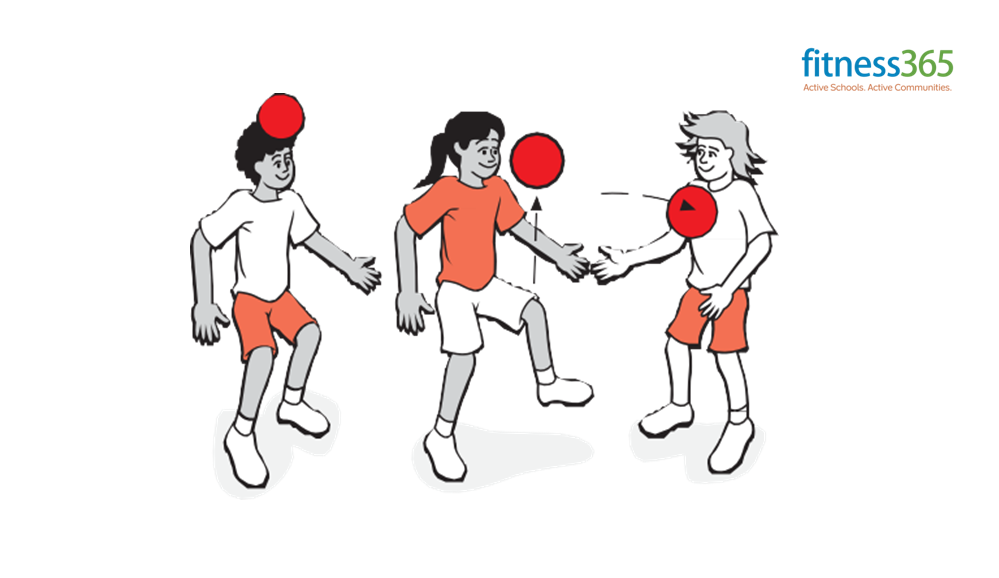
Trapping a ball with the body, body awareness (control), and relationships (with objects and others).
Set-up
- Large balls.
- Children spread out with a large ball each in the grass or hard area.
Activity: Let’s see …
- who can throw the ball up before catching it
- how many parts of your body you can use (other than your hand) to control the ball
- who can touch the ball with two body parts (not hands) before catching it
With a partner, let’s see …
- how many ways you can use to stop a ball bounced or lobbed on the full
- if you can stop the ball with your shins, thighs, abdomen, chest (hands crossed over), forehead
- if you can make the ball drop straight to the ground
- if you can stop a ball that has been lobbed over a net or other obstacle
Can you see …?
- eyes on the ball
- moving to the path of the ball
- presenting the body part for the trap
- relaxing
- ‘giving’ with the ball on contact
You could ask …
What can you do to get the ball to drop and stop immediately after it contacts your body?
Is it better to trap the ball with a small body part or a large body part? Why is this?

by Neetu | Jun 8, 2020 | Sports
Movement skills/concepts
Dribbling and controlling a ball with the foot (feet), trapping a ball with the body and feet, space awareness.
Set-up
- Large balls and markers/cones.
- Children are spread out in a defined area, each with a large ball.
Activity: Can you …?
- move the ball slowly, keeping it close to you, and stop it on the signal
- using the inside/outside of your foot, tap the ball along the ground, stop on a signal and dribble in a different direction
- roll the ball, run around in front and stop it
- dribble along lines and stop the ball on each corner
- dribble freely and stop the ball on every line you come to
- dribble around cones spread out in the area in various patterns, (e.g. full circle, reverse direction, zigzag in and out of the circle)
- when you meet someone, both stop your ball and give each other a ‘high five’, then dribble the other person’s ball away
In pairs with a large ball:
- stop a ball passed by your partner and pass it back
- stop a ball passed by your partner to your left/right and pass it back
- stop a ball passed by your partner, pass it back and move to a different place for the next pass
- see how many passes and stops you can do in 30 seconds
- with a ball each, pass and stop without the balls colliding
- one partner rolls the ball to try to score a goal (set up with two markers) and the other defends by trapping/stopping the ball; keep the competition fair by adjusting the width of the goal and the distance rolled
Can you see …?
- keeping the ball close
- touching the sides of the ball
- using the inside, outside and sole of the foot
- using both left and right feet
- balance and control
- control before speed
You could ask …
Which part of the foot do you use to control the ball?
How can you cause the ball to stop immediately after it hits your feet?
Variations
Vary equipment: Use a hockey stick and a small ball.
by Neetu | Jun 8, 2020 | Fitness Activity
Movement skills/concepts
Passing and catching, moving into space, defending, passing for accuracy.
Set-up
- Large ball.
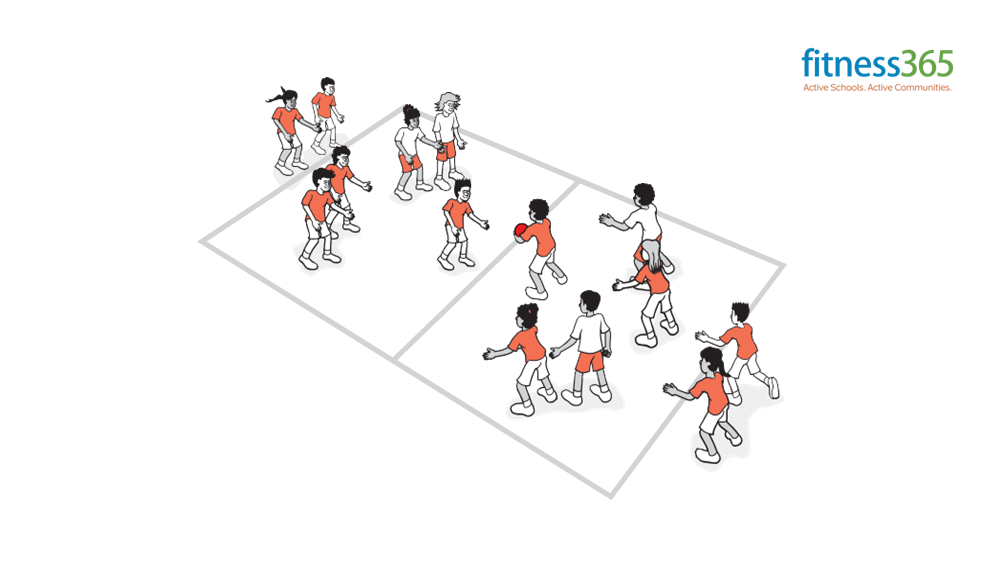
- Grass or hard surface area about the size of a netball court.
- Two teams of about eight players each: a
- goaler from one team and a defender from the other stand at opposite ends behind the goal line.
Activity
On the signal, one team passes from the centre line and attempts to score by making a clear pass to their goaler. They may run anywhere on the court with or without the ball but a penalty pass is given to the opposition if they are tagged with both hands while holding the ball.
After a tag, all players must retire 3 metres from the player taking the penalty pass.
A player must retire to the sideline until a goal is scored if the ball is kicked or an opponent is contacted in any way other than a light touch with both hands. If the ball is thrown or carried over the sideline, the opponent’s throw-in.
The goaler and defender cannot enter the playing area. If a goaler drops a pass, no goal is scored and a free pass is given to the defender. A goal cannot be scored directly from a penalty pass. When a point is scored, the game is restarted at the centre.
Can you see ….?
- rapid passing
- passing and moving into space
- defending the ball
- defending a player off the ball
- getting free for the ball
You could ask …
How can you get away from your defender?
How can you make it hard for the other team to make a pass (no contact allowed)? How can you work together to stop a goal from being scored?
What can you do if you move into space before your teammate is ready to pass?
Variations
Vary equipment and skills: Use a hockey stick and small ball, a soccer ball and push pass, striking with the hand.