by Neetu | May 29, 2020 | Fitness Activity
Movement skills/concepts
Running, leaping, jumping, throwing, and evading a throw.
Set-up
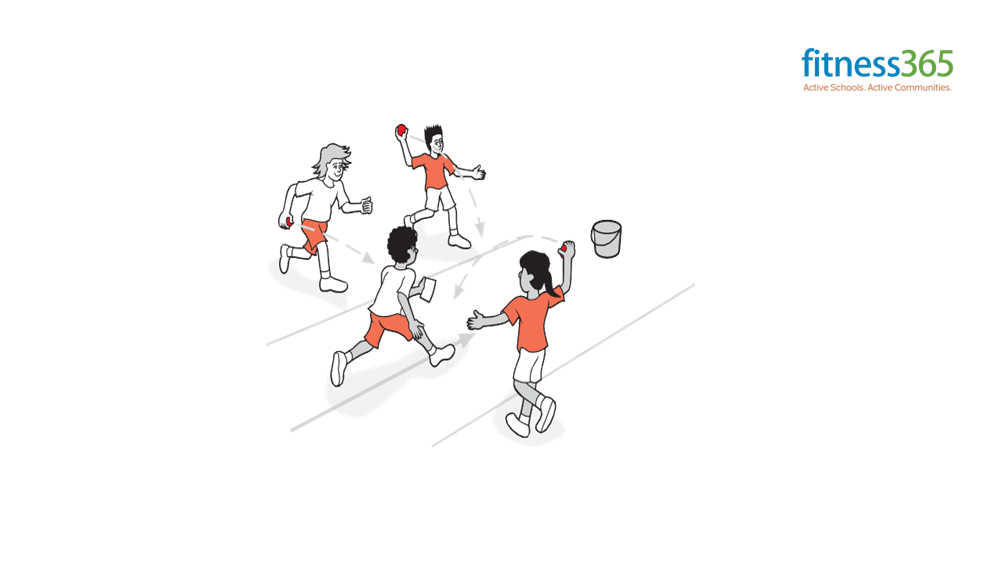
- Small, soft foam balls (computer viruses), an envelope containing ‘email’ message, and bucket (computer screen) at the far end of a defined grass or hard surface area.
- Two teams of four or more: the email team with the envelope, and the computer virus team, with a ball each.
- The computer virus team begins the game lined up on either side of the area.
Activity
The object of the game is for the email team to get the email message (in the envelope) to the computer screen (bucket). One member of the email team starts to run through the area to deliver the message, while the computer virus team aims to hit the runner below the waist with the balls. If the runner is hit, they must stand frozen on the spot. The next runner then tries to get the email through.
- quick moves
- dodging and faking
Variations
Change scenario: Use a Pirates of the Caribbean scenario – pirates try to steal the treasure while the guardians of the treasure try to stop them; or Shrek – Shrek must save Princess Fiona from the fiery dragons.
by Neetu | May 29, 2020 | Fitness Activity
Movement skills/concepts
Striking off a tee and fielding a ball.
Set-up
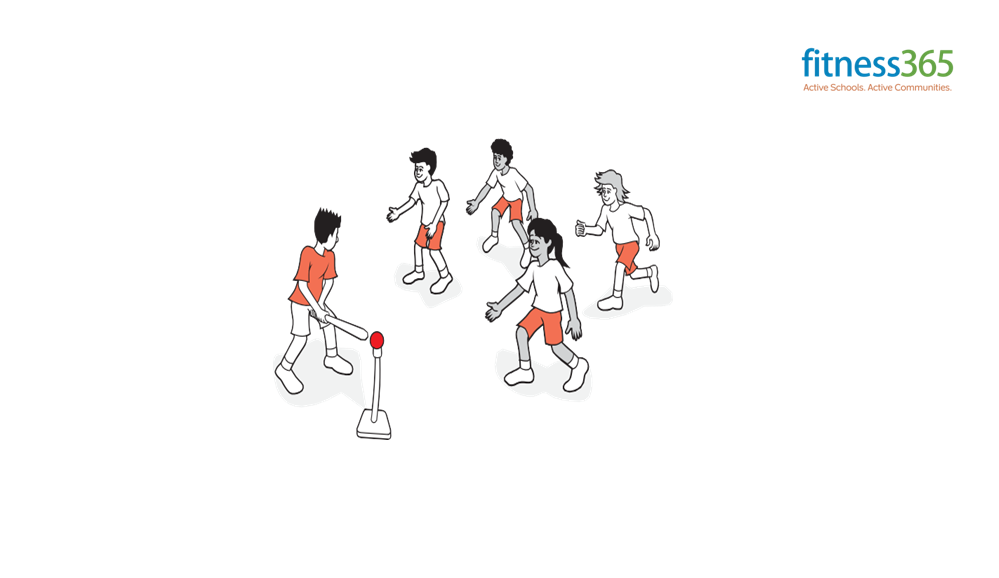
- Balls, bats, and tees.
- Groups of five–six, with a tee and three balls per group: a batter stands at the tee, and the other players spread out as fielders in a large grass area.
Activity
The batter keeps hitting the balls in quick succession, while fielders gain points (e.g. catch on the full = 50; catch on the first bounce = 20; fielding a ball = 10). When a fielder scores 50 or 100, that fielder becomes the batter.
- hands together on the bat
- feet apart, relaxed stance
- backswing
- following through
Variations
Vary rules: Replace the tee with a toss-up and hit, or a soft pitch.
by Neetu | May 29, 2020 | Fitness Activity
Movement skills/concepts
Kicking, ball control, moving in space, and relationships (with others).
Set-up
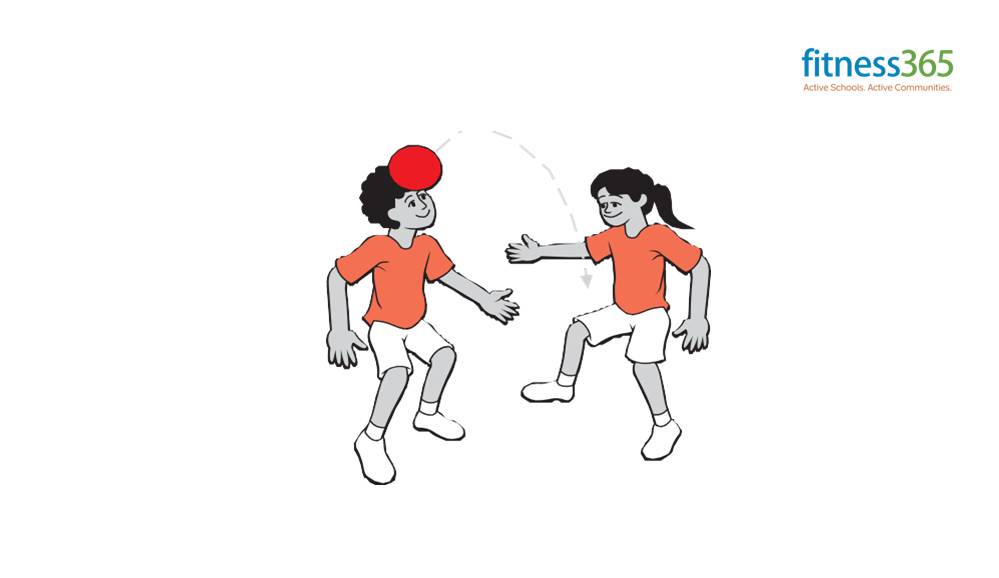
- Hacky sacks, light balls (woven bamboo or plastic) approximately 15 cm in diameter.
- In pairs or small groups, children are spread out in a defined area, each with a hacky sack or a light ball.
Activity
For warm-up children practice their striking skills using their feet, knees, and head, (e.g. foot volleys and heading). With a partner or in a small group, play a game of soccer volley. The aim of the game is to keep the ball in the air using feet, head or knees only.
- a flat striking surface – ‘flat as a pancake’
- quick feet – to move into position to volley the ball
- communication with team members
Variations
Vary Set-up: Play in the self-space of the group or individual, or travel in general space.
by Neetu | May 29, 2020 | Fitness Activity
Movement skills/concepts
Skipping for speed and change of direction, skipping to a rhythm, and space awareness (body parts).
Set-up
- Rhythm instrument.
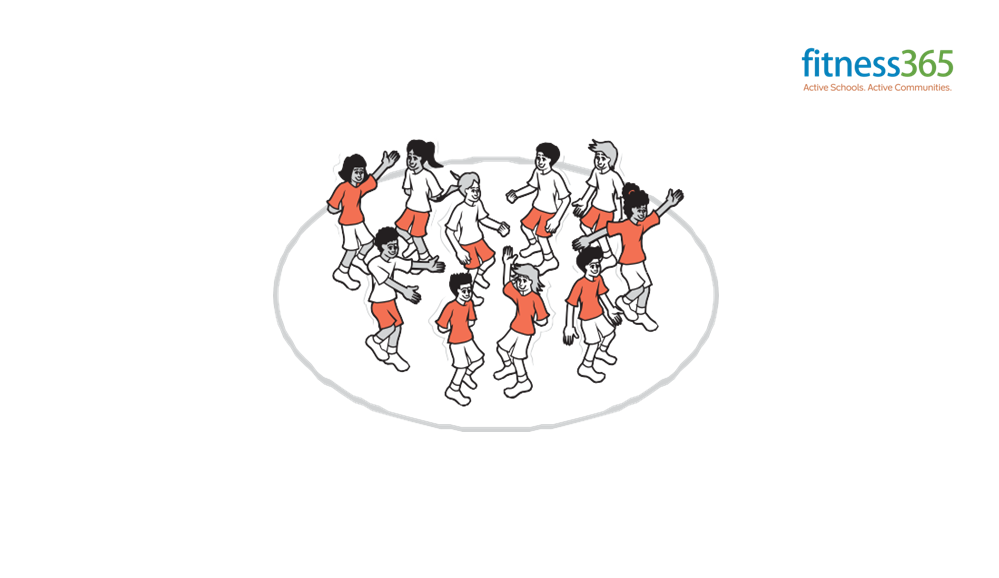
- Children are spread out within a marked circle in a hard or grass area.
Activity
Children skip within the boundaries of the circle and pretend everyone else in the circle is poison. If touched by another person, a child becomes poison and must skip with one hand behind their back. If touched a second time, the child puts the other hand behind their back. Begin by skipping slowly, then get progressively faster.
- coordinated skipping
- arms swinging freely
- rhythm
Variations
Modify area: Increase/decrease the circle size to make it easier or more difficult.
Add music: Skip to music.
by Neetu | May 29, 2020 | Fitness Activity
Movement skills/concepts
Jumping for distance, in varying directions and levels, creative ways, and with others.
Set-up
Children are spread out in a defined grass or hard surface area.
Activity
Who can jump …? (or Can you jump …?)
- as quietly/loudly as possible
- forwards/backward
- from a small crouch
- very fast/slow
- in a straight line
- like a giant/frog
- as if you are on ice
- making a circle
- with a partner
- with legs and arms stiff
- keeping your arms out from your side
- with your legs apart
- and land with your feet apart
Variations
Add stationary objects: Can you jump … over a box, across a rope, through a hoop?
Combine actions: Can you jump quietly while making an ‘O’ shape?
Jump your own height: Measure your height on the ground using a marker. Try jumping in different ways to reach your height.
by Neetu | May 29, 2020 | Fitness Activity
Movement skills/concepts
Walking to a rhythm and working with others (relationships).
Set-up
- Marching music.
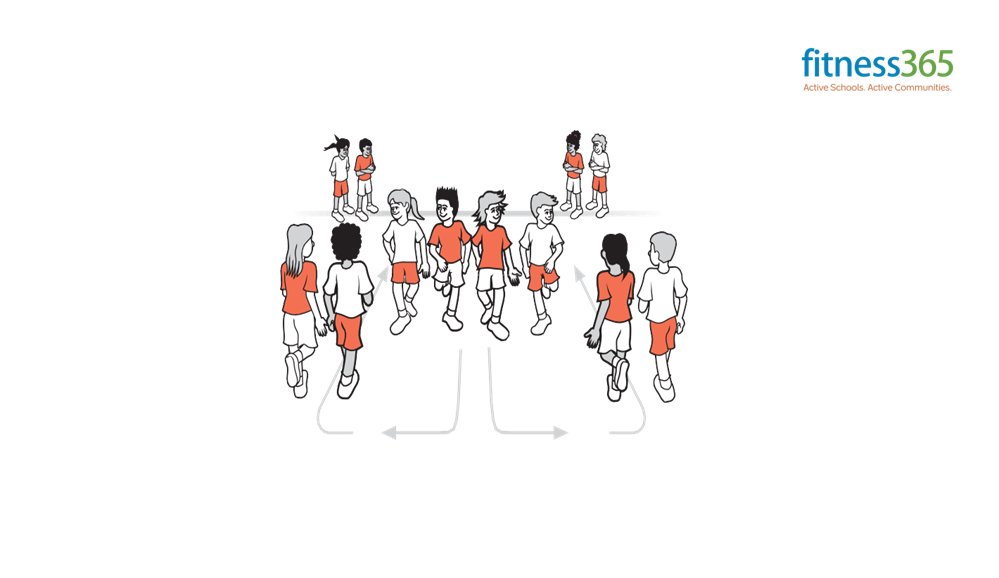
- A defined hard or grass area with an end line and a baseline.
- Children in pairs: partners stand at opposite sides of the area, facing the end line. A caller stands on the baseline.
Activity
Caller: Come down the centre in twos.
Each child marches to meet their partner at the end line. As a pair meets, they turn and march down the centre of the area to the baseline.
Caller: Two right and two left.
The first pair turns to the right, the second to the left, and so on.
Caller: Come down the centre in fours.
When the two lead pairs meet at the end line, they walk four abreast down the centre.
Caller: Four right and four left.
Children divide again, with four children to the right and four to the left.
Caller: Come down the centre in eights.
When lines of four meet again at the end line, they join together to form a line of eight abreast.
Variations
Work in fours: Come down the centre in fours, separate into pairs, form arches or go ‘over and under’.