by Neetu | May 25, 2020 | Fitness Activity
Aim
Students will be able to perform the locomotor skills and will be able to call out what letter (or number) they have landed on
Equipment Required
- Four cones for boundaries (same color).
- Spot marker for every kid.
- Music Player & pen drive.
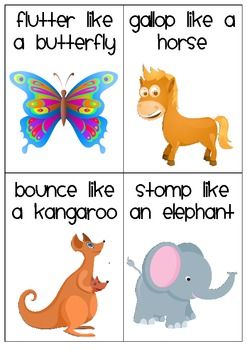
- Skill Cards of a horse galloping.
- Hula-hoops.
- Ropes
Play Area Set-Up
Layout letter cards over a large area. Show students the area around the cards where they will be walking/running and other locomotor skills
Activity Description
- Today we are going to learn how to gallop, just like a horse!
- Demonstrates how to gallop: USE RELEVANT SKILL CARDS
- In galloping, you step forward with one foot that is always your “lead” foot.
- The toes of your back foot chase the heel of your lead foot, like skipping.
- Both feet leave the ground, and you land on your back foot, followed by your lead foot.
- When galloping, point both feet forward. Arms swing forward at the same time the back foot moves forward. Head up and look forward.
Practice:
- Ask children to gallop in a line to the opposite side of the activity space.
- Gallop alongside any children who have difficulty (model the movement).
- With a partner, children spread out around activity space and practice the “step-toe-to-heel” pattern.
- Invite children to gallop and work together to make shapes as they gallop (circle, figure eight, triangle, following a line on the floor
- Leaders should encourage children to try galloping with opposite foot leading.
Lets Play Game: Galloping horses relay race
- Divide children into 4 or 5 groups with even numbers.
- Designate a start line at one end of the activity space.
- For each group, the leader places a cone at the other end of the activity space to mark their turn-around point.
- Groups line up behind the start line.
- Each group has one skipping rope which will be used as the “reins” to lead the horse.
- The first person in line is the horse, and they place the reins around their waist.
- The second person in the line holds the reins as if they are guiding the horse.
- In pairs (horse and guide), children gallop around the turn around point and back to the start.
- When they reach the start line, they pass the reins to the next pair in their group.
- The first group to have every pair complete the course wins.
Wrap-up (2 minutes)
- Call the children back into a circle and review what they learned today.
- Why is it important to swing your arms when you are galloping?
by Neetu | May 25, 2020 | Fitness Activity
The straight drive is played on the front foot by easing the ball back in the opposite direction to the delivery.
- An overpitched delivery to the middle or off stump is the perfect opportunity to play the straight drive.
- Relax your body and assume a balanced stance.
- Raise your bat with a high backswing.
- Step forward with your front foot landing close to the pitch of the ball and toes in line with the delivery.
- Bend your front knee and lean your weight forward.
- Present the bowler with the straight face of the bat continuing upward in an arc.
- Work with your top hand, leading with the elbow, and lend support with your bottom hand.
- If the ball is pitching in good length, you can step out to drive it forward along the ground.
- If it pitches on a good length, you can play a straight drive off your back foot.
- You can also roll your wrist to let the bat continue in an arc over your front shoulder.
by Neetu | May 25, 2020 | Fitness Activity
An off-drive is a vertical stroke played on the front foot to hit the ball wide of mid-off.
- The right ball to play the off drive is an over-pitched delivery falling on or outside of off stump.
- Relax your body and assume a balanced stance.
- Raise your bat with a high backswing towards fine leg to gain momentum for your shot.
- Leading with your head and front shoulder, place your front foot forward, towards where the ball is pitching.
- Swing the bat vertically with its face forward and play the shot close to your front foot.
- Break the position of your wrist to let the bat continue in an arc over your front shoulder.
by Neetu | May 25, 2020 | Fitness Activity
The back foot defense is played to block the ball rather than to score runs
- It is usually played to a fast delivery that falls short of good length and rises to the stumps with a high bounce.
- Relax your body and assume a balanced stance with your eyes level.
- Move your back foot towards the stump and shift your front foot to meet the back foot.
- Raise your front elbow and swing the bat with its face angled down so the ball pitches right in front of you.
- Hold your position instead of following through and hit the ball down with a relaxed grip.
by Neetu | May 25, 2020 | Fitness Activity
Like a shot that simply blocks the ball, the front-foot or forward defense is helpful while getting used to the pitch.
- Any well-pitched delivery headed towards the stumps is a perfect opportunity to play the front foot defense.
- Relax your body and assume a balanced stance with your eyes level.
- Step towards the pitch of the ball with a bent front knee and transfer your weight by leaning forward.
- With a short backswing or none at all, make contact directly below your eyes.
- Remember that a gap between your bat and pad creates the risk of getting bowled.
- Keep the bat angled down to avoid getting caught and play against the line of the delivery.
- If the ball is heading outside off stump, step slightly across the crease and hit the ball with a straight face towards the ground.